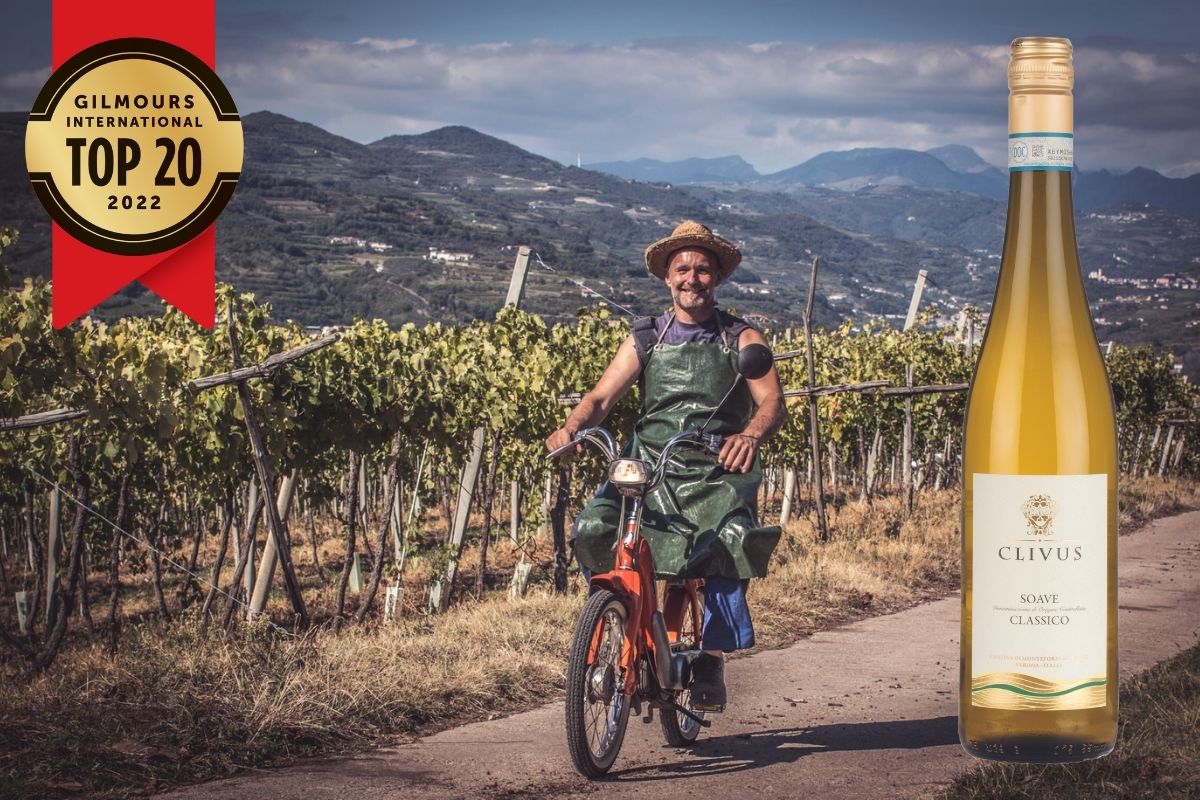
The Cantina di Monteforte Soave Classico Clivus 2020 is a GIWC top 20 award winning wine from East Veronese, Italy. It is fresh, fruity and a credit to the volcanic area it is grown in.
Cantina di Monteforte was established in March 1952 as a consortium of 80 winegrowers around the Val d’Alpone valley. The area is world renown for its fossils from Bolca and the Soave Classico wine. The fields on which the consortium’s grapes are grown are hills of volcanic origin that are close to the sea, which gives the wine a unique sapidity and minerality.
The winery's love for the land and the vines ensures wine is produced with three goals in mind: The enhancement and safeguarding of their territory, experimentation and innovation in the ecological sector, and attention towards their customers accompanied by the study of new trends. The winemaking process is a result of high innovation techniques in pressing and refrigeration of must, that preserves the aroma of Trebbiano grapes and combines them with the good structure of Garganega.
The Soave Classico has a straw-yellow appearance with green hues. It is delicate with hints of hawthorn, elder and violet. On the palate, it is dry, with a freshness on the mouth, it is well bodied with an aftertaste of bitter almond.
The wine will keep its freshness for up to two years thanks to the bottle's screw cap closure. It is drinkinable after the two-year range, however, it does lose the freshness as part of the normal evolution of Garganega.
The Soave Classico is an easy-drinking wine with a long aftertaste, best for the average consumer or critical customers alike. It pairs well with many foods, simple antipasti, pasta with Mediterranean-style sauces, fish, and soups alike, or it can be served as an aperitif.
FAST FACTS:
Winery Name: Cantina di Monteforte
Location: East Veronese
Region & Country: Veneto, Italy
Grape Variety/Varieties: Trebbiano, Garganega
'Fun Fact' about the wine/winery/winemaker? The wine is produced in a region that is world-renown for its fossils.