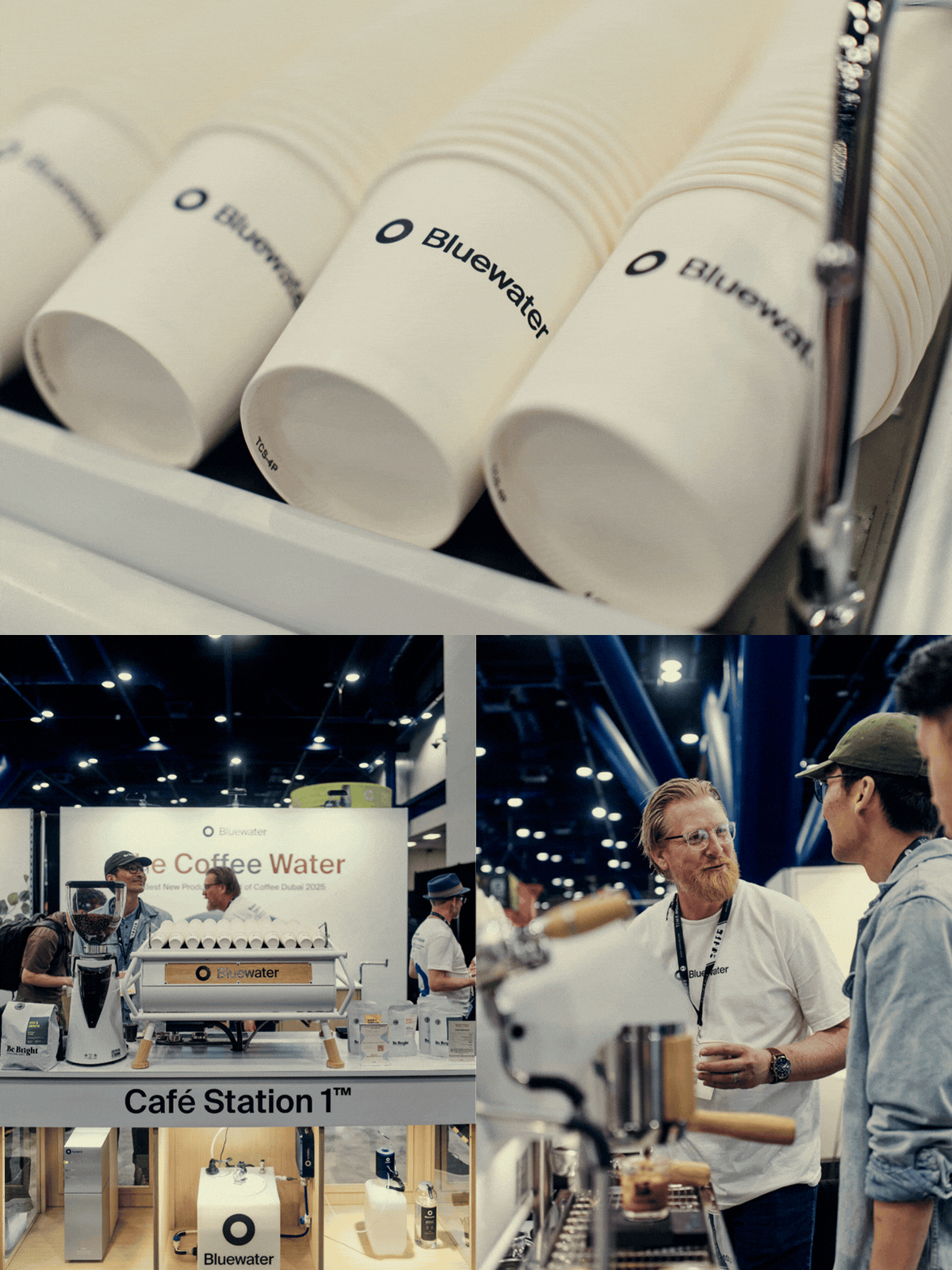
For Niklas Ivarsson, President, Bluewater USA Inc, coffee machine maintenance is the heart of a business and goes beyond simple cleaning.
Coffee is about 98 percent water, yet Ivarsson highlighted that for years, water has been one of the least controlled ingredients in a café.
“Operators control the coffee, the grinder, the recipe, the milk, and the machine temperature, but many still rely on city water or a basic filter. That is not control. That is riding the water-quality rollercoaster every day,” he said.
Ivarsson added that water safety was no longer a minor issue and that it was the responsibility of a café owner or roaster to ensure whatever they served customers was safe.
“From my side of the table, that is a massive responsibility. The customer trusts you. So the water has to be safe first, then built for the machine and the cup.”
Bluewater SuperiorOsmosis creates a safe blank canvas by removing PFAS, microplastics, nanoplastics, heavy metals, and the unwanted chemical load that can enter the water supply.
It is then remineralised with intention using LiquidRock (and CoffeeRock coming soon for coffee-specific applications), to build water for purposes such as equipment protection, stable extraction, and better flavour.
“We give operators control over the water for safe drinking, equipment protection, and flavour extraction. For me, that is real maintenance: control the water, protect the machine, and protect the cup.”
Other areas where baristas cut corners included failing to flush properly, not wiping down baskets, not cleaning steam wands, not weighing doses, rushing shots, and skipping cleaning routines, which seem small in the moment, especially during a rush. Still, they show up quickly in the cup.
“Great coffee is not guesswork. It comes from repeatable habits.”
Another thing many baristas missed was purging the service boiler during scheduled closing or maintenance.
“It happens inside the machine, so it is easy to forget. But if it is skipped, the boiler water becomes increasingly concentrated over time, which can affect equipment health, water stability, and consistency.”
For this, training has become essential, and every barista should know the shop standard, how the machine should behave, and why the routine matters.
“Training is everything because coffee is built on small details.”
Shot time, crema, dose, milk texture, the sound of the milk when steaming, pitcher volume, cleaning routines, and water quality can all add up. If those basics are not trained, every barista ends up creating their own version of the drink, leading to a customer experience depending on who is working that day.
Therefore, owners or operating managers need to check the basics every day, ideally on both the AM and PM shifts.
Dose, shot time, yield, milk volume, syrup pumps, ice levels, cup size, and recipe build control both quality and margin. The AM shift may be dialled in, but by the afternoon, Ivarsson said the grinder has moved, the milk routine has changed, or the recipe is being built differently, leading to lost consistency.
He also believed that management should taste the coffee every day, as quality cannot be managed solely through reports, and that portion control was not about being cheap but about protecting the recipe.
His advice on recipes was to simply listen to the locals and avoid making it too complicated.
“Use ingredients you already have, keep the recipe easy for the barista, and make sure you can repeat it,” he added.
“The worst thing that happens is that the special does not sell. You still have your core menu. But sometimes you are one drink away from something that really works, and that usually comes from listening to the people already standing at your counter.”
More from the coffee category here