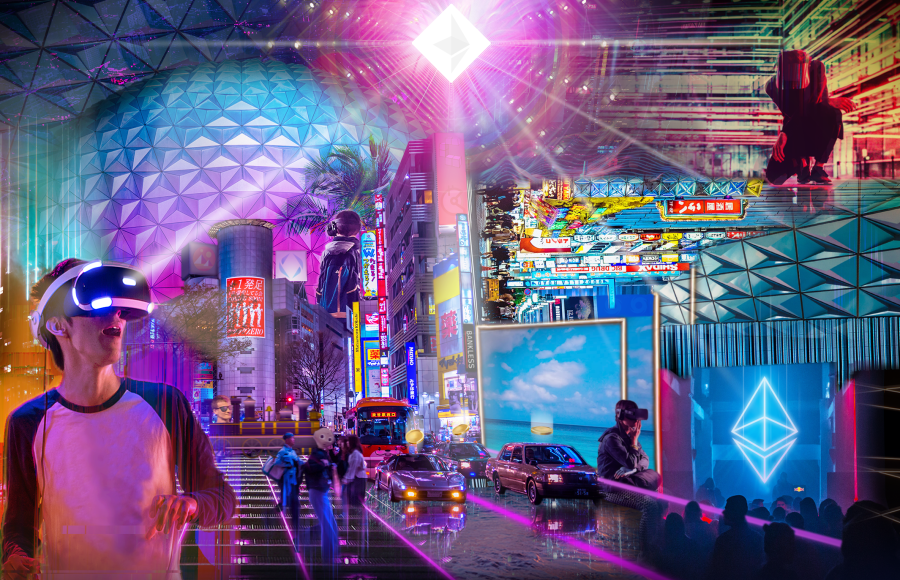
You might have read about McDonald’s and Panera, among other major hospitality and retail brands, filing for trademarks within the metaverse and you’ve probably seen the digital art renderings of monkeys selling for thousands or even millions of dollars.
NFT-based restaurant experiences have been creeping into the industry lexicon recently, from NFT food halls and exclusive membership-only restaurants to one brand, Chick’nCone allowing investors to use NFTs to buy share in brand franchise fees and royalties.
But what exactly is the metaverse? And are NFTs just a fad, or should restaurant operators invest in it as the “next big thing” for the industry?
Michael Kondoudis, a Washington, D.C.-based attorney specialising in federal trademarks and patents has explained the basics of NFTs, crypto, the metaverse, and why the restaurant industry should sit up and pay attention.

NFTs for Dummies
NFT stands for non-fungible token. They are digital tokens. When something is fungible, it's easily replaced with something of the same quality or value. A non-fungible token is unique. This technology has been developed to protect crypto-- that's where this blockchain technology comes from. The blockchain protects you from having someone go in and copy a bitcoin and saying ‘well, now I have two bitcoins.’ The blockchain keeps it unique and non-fungible. NFTs lock up and make sure that the token is unique, so that the crypto asset, or sometimes even a real world asset, is owned by one unique person. That’s what an NFT does.
The Difference Between NFTs and Cryptocurrencies
Cryptocurrency is going to be the primary digital currency within the metaverse. Whether it will be Bitcoin or another crypto or state-backed currency remains to be seen. But in a lot of ways, it’s like a credit card transaction on steroids. That's what it will be like. And so the NFT's are blockchain protected from copying unique digital assets. That’s where the linchpin is between an NFTs, crypto and the metaverse—that’s where everybody is filing their trademark applications.

The Metaverse for Dummies
Right now, the metaverse is being driven by the gaming world: Unity, Roblox and all of these open-world gaming systems, which allow for the most advertising and product placement. Many of them are currently being played without virtual reality headsets. We are at a point where the technology does not allow us to realize what we can conceive as the metaverse, and even a VR headset doesn’t make it feel real yet.
Currently, the experience is somewhat limited (it looks like a game). Facebook envisions the use of VR headsets and AR glasses to get a more “immersive” feel and that is coming in the near future.
Why Should a Restaurant Operator Care?
The first reason they should care is that the big, famous brands are interested and even a small restaurant should wonder why McDonald’s is filing trademarks for NFTs. Even famous brands have come to realise that their brands are not 100 percent protected, and they are exposed to trademark infringement that they can't stop [within the metaverse]. They're trying to remedy this weakness in their brand protection because the technology got a little bit ahead of the law.
So, if some guy gets the bright idea of entering the metaverse and selling code that when rendered makes it look like your avatar is wearing Nike shoes, are they really infringing the trademark registration that Nike holds? It’s code, not shoes. So, what did Nike do? They realised that the most cost-effective way to fill this gap in their protection was to file trademark applications.
McMetaverse
McDonald’s has taken a similar approach, but it's a little different because they're in restaurant services. They know the metaverse is a few years in the future, but they didn’t want a trademark infringement problem, so they did that now. The next reason that they decided to do this, I believe, is cross promotion. Their exposure or footprint in the metaverse will almost certainly carry over into the real world.
There will be places where they can advertise in the metaverse, and it will be as effective as advertising in the real world, maybe even more so because it might be less expensive since everything is done digitally. McDonald's also filed trademarks for McDelivery and McCafe, which is open for several business services including virtual concerts and online events where you pay with crypto to get NFT-backed tickets.
They’ve even applied for a virtual restaurant featuring home delivery. In other words, you can order your food in the metaverse and they'll deliver it to you in the real world.
And if You’re Not McDonald’s?
The next reason restaurants should pay attention is revenue. Not every restaurant has enough enough recognition or cachet to be able to sell branded virtual goods, but virtual restaurants are also serving as meetup places.
A coffee shop could have a place within the metaverse where they could sell advertising for other businesses, Coke might pay them to offer co-branded products in their virtual restaurant NFT. But the last one, and the one that really matters is, well, there's two reasons, two final reasons.
It will take time to figure this all out, but it never hurts to dip a toe into it and start early, which is what all of these major brands are doing.
The other thing they’re doing is protecting their brand from harm. Let’s say someone other than Panda Express opens up a Panda Express in the metaverse and they’re selling virtual food, and get the idea to have virtual fortune cookies with racy fortunes written on them? How do you stop them? It’s code, it’d not real.
Everyone wants to get a foothold in the metaverse so they have a chance to fight back in case anything happens.
Last Advice
When it comes to restaurants, I don't think restaurants are going to be trading in NFTs: I think their focus is going to be on virtual goods and services.
Don't get bogged down in these cryptocurrency/NFT details: focus on the virtual products and services. The opportunities for cross promotion through meetup spaces like a virtual coffeehouses are abundant.