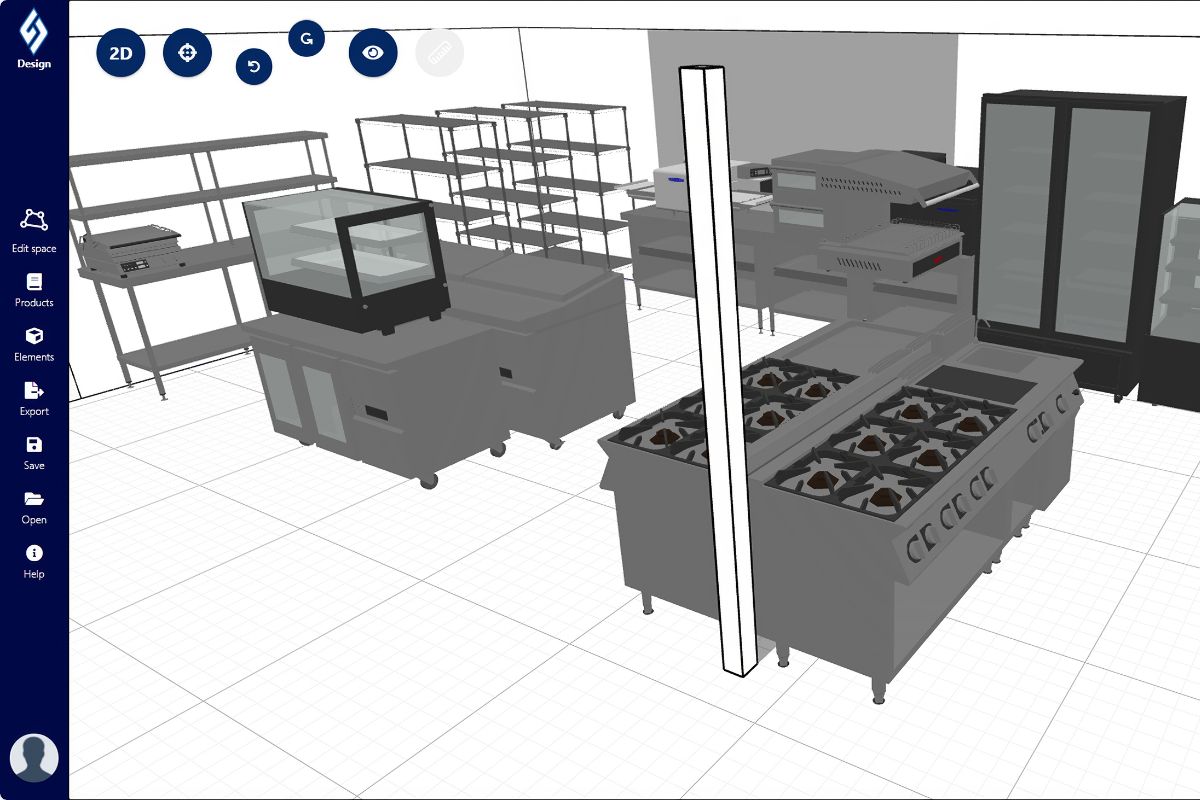
Kitchen design mistakes rarely show on opening day, but they will appear when it’s busy, staff are stressed, and customers are waiting.
Instead of facing expensive repairs later on, start the process right by using the Stoddart Design Tool, which makes the process seamless and allows businesses to visualise the space before it’s been built.
Designing for speed, simplicity and workflow are the key elements of a successful kitchen.
1: Buying Equipment Before Designing the Layout
Mistakes are often made when ovens, fridges or cooktops are purchased early because of deals, promotions or recommendations. While they may seem like a good idea at the time, the consequences will be felt when equipment doesn’t fit properly, blocks workflow, or requires expensive service changes.
Designing the kitchen first will mean selecting equipment that fits the workflow.
2: Designing for Average Trade Instead of Peak Service
Planning a kitchen for quiet midweek operations will cause a multitude of issues when demand spikes over the weekend. A domino effect of slow ticket times and overcrowded staff will result in lost revenue.
Instead, designing for the busiest hour will ensure the kitchen is prepared for all hours of service, rather than just a typical night.
3: Poor Workflow
A lack of spatial awareness will mean prep, cooking and dishwashing areas overlap. With staff crossing paths, it’s almost guaranteed that accidents, delays and food safety risks are bound to happen.
Implement a one-directional food flow, from delivery to prep, cook, serve, and washing stations. The Stoddart Design Tool will help visualise staff building before construction.
4: Underestimating Storage Space
Not allowing enough refrigeration or dry storage is a common oversight when designing a kitchen. With daily deliveries and a busy workspace to manage, cluttered benches and food waste are an unwanted nuisance caused by not having sufficient storage.
Plan to have enough storage space for at least your busiest trading period, plus buffer stock too.
5: Making the Kitchen Too Big - or Too Small
Either wasting rent on unused space or cramming equipment too tightly are common effects of a kitchen being the wrong size. The idea is to maximise the space for dining alongside an efficiently designed kitchen.
Kitchens that are disproportionately sized will mean higher rent, not maximising seating capacity, and inefficient labour.
6: Ignoring Cleaning and Maintenance Access
Equipment pushed hard against walls or each other makes it difficult to clean. This will cause health compliance issues and costly deep cleans to stay up to code.
Using the Stoddart Sketch Tool will mean that operators can clearly plan out the kitchen space, allowing sufficient access for cleaning behind and beside equipment.
7: Poor Ventilation Planning
A common mistake made when planning a kitchen area is not prioritising extraction until after selecting equipment. This runs the risk of heat buildup, uncomfortable staff, failed inspections and retrofit expenses.
It’s essential that ventilation is planned alongside the cooking line from the beginning.
8: Not Involving Chefs or Operators Early
Design done only by architects or builders will create beautiful kitchens that don’t work operationally.
To prevent this outcome, the Stoddart Sketch Tool will have experienced chefs review the layout before approval.
9: Forgetting Utility Requirements
Insufficient power, gas, or drainage planning will mean major construction variations and delays in the long haul.
Avoid being in this position by using the Stoddart Sketch Tool, and confirm service requirements during layout design, not during installation.
10: No Allowance for Future Growth
It’s not uncommon for kitchens to focus only on designing for opening day. Instead of thinking about the future from the beginning, restaurants will instead face expensive renovations within a couple of years in order to keep up.
It’s important to leave space or service capacity for additional equipment.
The Reality Most Owners Learn Too Late
A kitchen redesign after opening can cost three to five times more than getting the design right initially, plus lost trading time.
Before approving a kitchen design, have a quick self-check. Ask Yourself:
- Can staff work without bumping into each other?
- Is dishwashing separated from food prep?
- Can equipment be cleaned easily?
- Will this handle my busiest service?
- Can I grow without rebuilding?
If any answer is “maybe”, get in touch with Stoddart NZ and plan your kitchen with the Stoddart Sketch Tool. It’s better to do it now than later.