Aromas have always fascinated winemaker Jenny Dobson. They are ingrained in her earliest memories, like the rosemary bush at the gate of her first home and the lily of the valley in the garden of her second home.
To pursue this fascination, Dobson decided to study science and eventually became interested in wine, known for its diverse aromas, flavours, and textures. She approached winemaking with a humble attitude, an open mind, and a desire to work with nature.
Before settling in the Hawkes Bay region of New Zealand, Dobson spent 16 years in France, followed by a year in Western Australia.
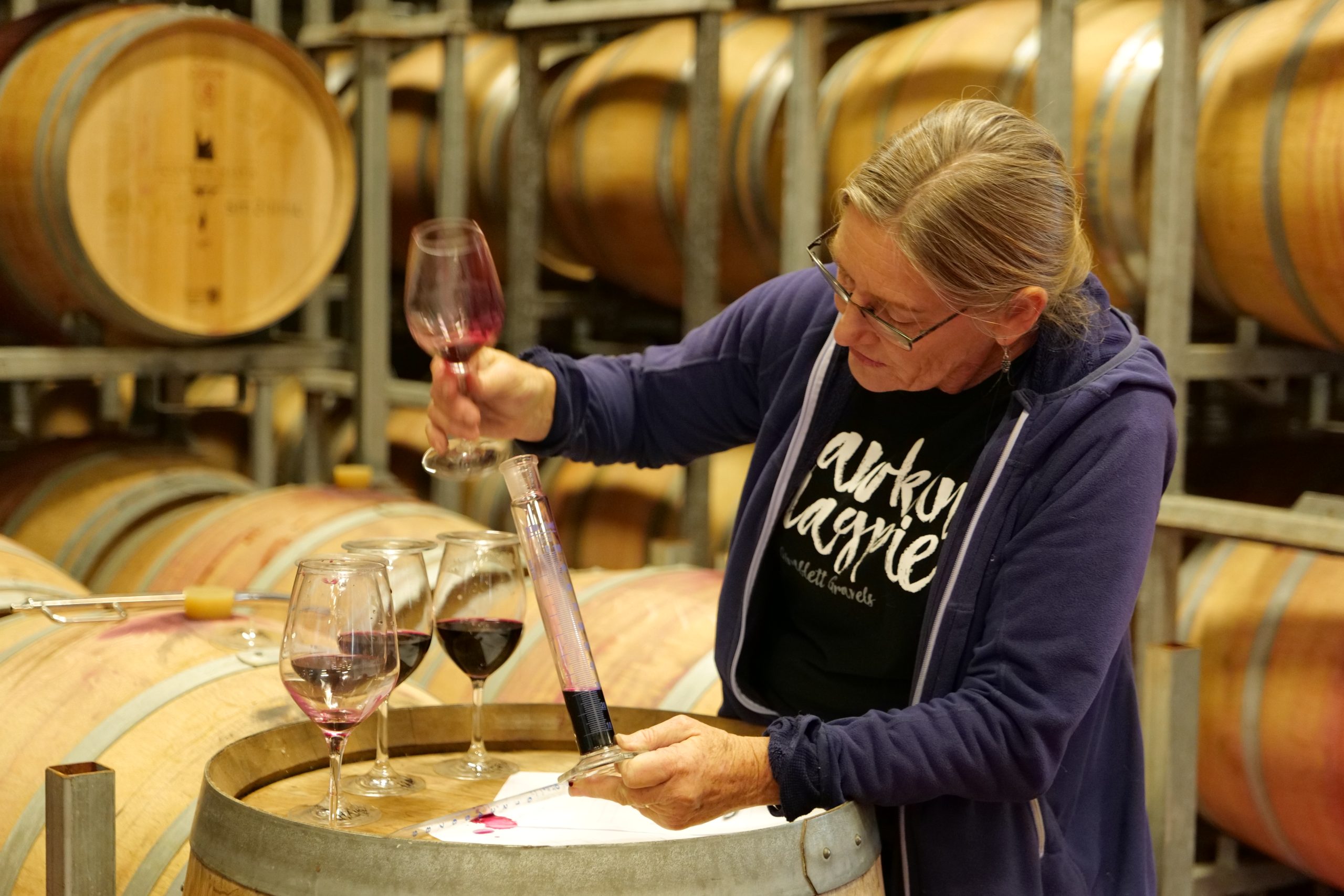
She currently works for Squawking Magpie, a winery that produces a range of wines, including Chardonnay, Pinot Gris, Rosé, and Reds of the Gimblett Gravels.
“Our owner, Gavin Yortt, is a pioneer grower of the Gimblett gravels, having developed a vineyard in 1981. The Squawking Magpie label was launched in 1996 to showcase the best of single vineyards,” said Dobson.
Dobson’s winemaking philosophy has been centred on creating authentic wines that reflect the land where they are grown. She has always aimed to produce wines that offer pleasure and stimulate the senses by achieving balance, elegance, and layers of flavour.
“I respect tradition but also question it, continually looking for innovative ways to work with grapes and make wine.”
Adapting to the changing nature of grape growing and winemaking has been essential to producing high-quality wine year after year for Squawking Magpie, whose wines stand out from others in the region due to their balance, complexity of aromatics, and freshness.
For Dobson, deciding whether a wine is ready involves constantly assessing its development in the winery and bottling when the wine has matured to achieve a balance between fruit weight and structure. The bottling process is a logistical challenge that requires careful planning.
Over the past 45 years, ongoing advancements and changes in winemaking technology in soil, grape growing, juice extraction, fermentation, and wine aging have led to subtle and sometimes dramatic changes.
Seasonal variation has also been a constant challenge for Dobson since adapting to the unique character of each vintage is essential to producing high-quality wines.
“The key is to create wines that show authenticity and balance, regardless of the challenges posed by the weather or other factors.”
She added that the changing attitudes of wine consumers and declining wine consumption, especially among young adults, have led to economic pressures on grape growing and winemaking.
“My advice to aspiring winemakers is to be passionate, determined, and open-minded and to learn about vineyards, grapes, and soils. Developing your knowledge of wine through tasting and taking notes is essential.”
For those looking to learn more about the world of wine, Dobson has recommended embracing diversity, appreciating aromas, flavours, and textures, looking for the stories behind wines, grape varieties, and regions, and trusting one's palate and learning from others.