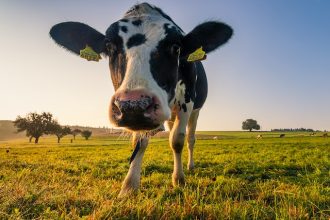
The concept of nose to tail or horns to hoof can be taken in many ways. Some people still prefer to cut the fat off their steak, while others will gnaw on a chicken bone until it’s almost unrecognisable. Around the world, there are a lot of ways in which the entirety of the animal is used in cooking. This idea is perhaps going to become more relevant in the future as people move increasingly towards sustainability—something you don’t get throwing away ‘perfectly good meat’.
We’ve compiled some of the ways in which the animal truly goes the distance—for those that don’t use the fat, read with caution.

Deep-fried Rocky Mountain Oysters
Rocky Mountain oysters is a dish made from bull testicles. Usually, the organs are deep-fried but come in variations including being served in a demi-glaze. Rocky Mountain oysters, and similar dishes, like lamb fries (not to be confused with lamb’s fry), pig fries, and even turkey fries, all relate to the cooking of the testes. These delicacies are common in areas dominated by animal farming and production. This sort of dish is sustainable, because animal often happens regardless, providing a range of benefits to vets and farmers. Adding a bit of flour, and deep-frying an otherwise discarded product only makes sense.

Haggis
Haggis is a well-known Scottish dish that famously utilises sheep’s pluck (heart, liver and lungs), as well as other spices and vegetables. Not one for the faint of heart, haggis is traditionally encased in the animal’s stomach, though modern iterations often use artificial casings. Although haggis doesn’t sound like something you’d want for dinner every night, its taste is often described as nutty, peppery and quite delicious. Although haggis is representative of Scotland, there are similar dishes around the world that use the off-cuts or offal along with a variety of spices, starches, and vegetables. Some of these include scrapple, a loaf-like slab of meat prepared with off-cuts, cornmeal and wheat flour in the United States; slátur, an Icelandic food made from the innards of a sheep; drob, a traditional Romanian dish of lamb offals akin to haggis, although it often contains whole boiled eggs; and pölsa, a traditional northern Swedish dish usually served with pickled beetroots and potatoes.
Fugu
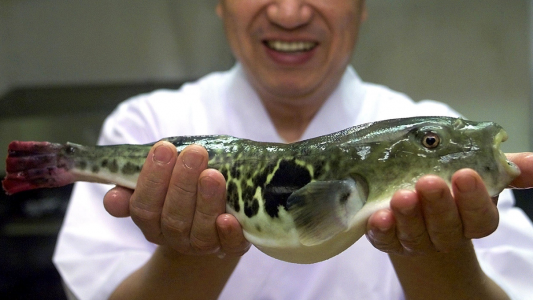
Fugu is a type of fish typically consumed in Japan. Although not all parts of the fish are used, there is still an element of ‘should we really be eating this?’ Parts of the fugu fish are so poisonous, the smallest mistake in preparation could lead to instant death. While the risk is a part of its allure, chefs train for years and must acquire licenses before they are legally allowed to serve the fish. Perhaps this is why the price point for a piece of fugu is so high—dishes can reach over $200. The dicey experience, however, doesn’t stop the consumption of around 10,000 tons of fugu each year in Japan.

Khash
Khash is a dish consisting of boiled sheep or cow parts—often the head and feet. The dish is commonly found across the Caucasus, the Middle East and in Arab countries, each with regional variations depending on what is available. Most often, the dish is prepared by removing the hair from the feet and boiling the meat overnight. Often, no salt or spices are added to the dish prior to consumption, where people then flavour to their liking. The dish is often served with regional breads and vegetables.
Shirako
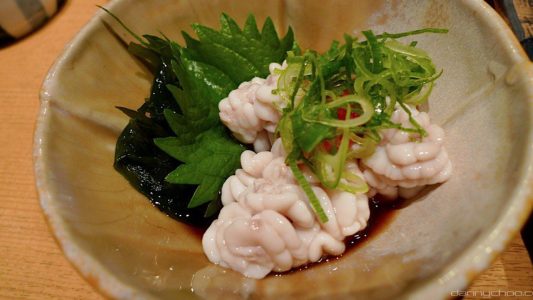
Shirako is another strange delicacy often found in Japan. Shirako is fish semen—usually served on top of rice, fried in tempura batter, or even laid on top of custard. Praised for its velvety texture, fish semen is used internationally, not just in Japan. Korean, Romanian, Russian, and Sicilian cuisine use milt (fish sperm) in a variety of ways—fried, as a pasta topping, made into curry, etc.
Shiokara
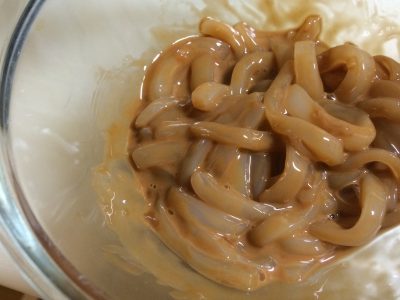
Shiokara is a Japanese dish made from various marine animals, combined with their salted, fermented viscera. In what ends up looking like a brown paste, this dish is said even to be an acquired taste for the Japanese palate. Some places in Japan specialise in Shiokara, often served alongside decent shots of whisky to be consumed post mouthful. This dish truly represents using each and every part of the animal in some way.