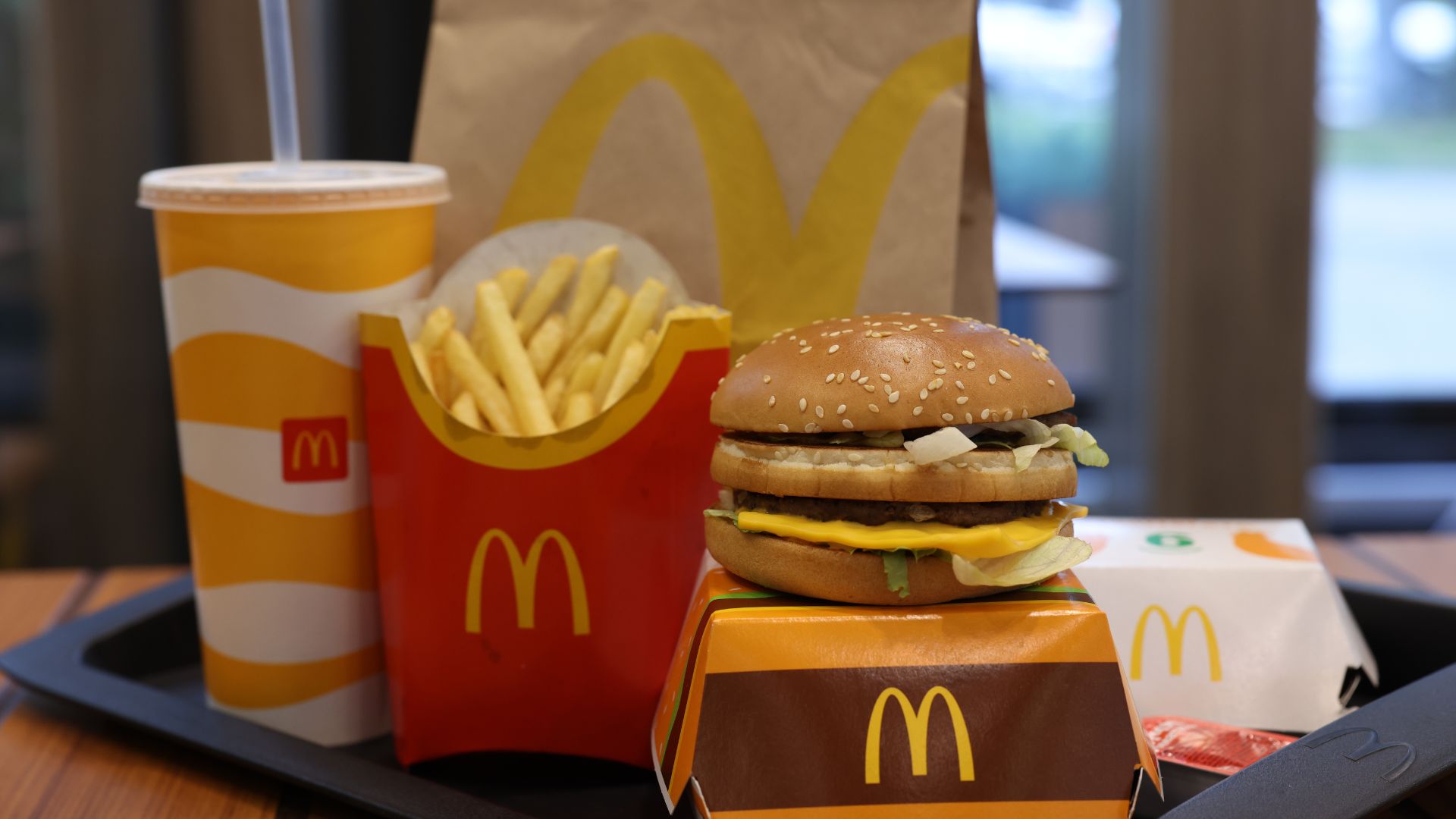
McDonald's has lost the exclusive rights to the term "Big Mac" for poultry products in Europe after not using it for five consecutive years, according to a ruling on Wednesday by the region's second-highest court. This decision marks a partial victory for the U.S. fast-food chain's Irish competitor, Supermac's, in a prolonged trademark dispute.
The ruling from the Luxembourg-based General Court stemmed from Supermac's 2017 effort to revoke McDonald's trademark of the name Big Mac, which was registered in 1996 for meat and poultry products as well as restaurant services.
The European Union Intellectual Property Office (EUIPO) had previously rejected Supermac's request for revocation, affirming McDonald's use of the term for beef and chicken sandwiches. This led the Irish company to challenge the EUIPO's decision.
Supermac's, which started its first restaurant in Galway in 1978 and aimed to expand into the UK and Europe, offers beef and chicken burgers along with fried chicken nuggets and sandwiches.
The General Court dismissed McDonald's arguments, partially annulling and modifying the EUIPO's decision.
"McDonald's loses the EU trademark Big Mac in respect to poultry products," the judges ruled.
"McDonald's has not proved genuine use within a continuous period of five years in the European Union in connection with certain goods and services."
In response, McDonald's stated via email that it can still use the Big Mac trademark primarily for a beef sandwich and will continue to sell its Chicken Big Mac.
"This decision will not in any way impact our ability to use or to protect the trademark against infringements," the company asserted.
Supermac's founder, Pat McDonagh, expressed satisfaction with the outcome, calling it a big win for anyone with the surname Ma" during an interview with Ireland's Newstalk Radio.
"It means we can expand Supermac’s across the EU, which is a significant victory for us today," he said.
Trademark owners should take note of this ruling, advised Matthew Harris, an IP lawyer from Pinsent Masons.
"This is a huge wake-up call. Owners of well-known trademarks cannot simply assume that the public's recognition of their brand is sufficient," he said.
"The case demonstrates that even globally renowned brands are subject to the same level of scrutiny when it comes to proving genuine use of a trademark in a specific territory."
To read more QSR news, click here.