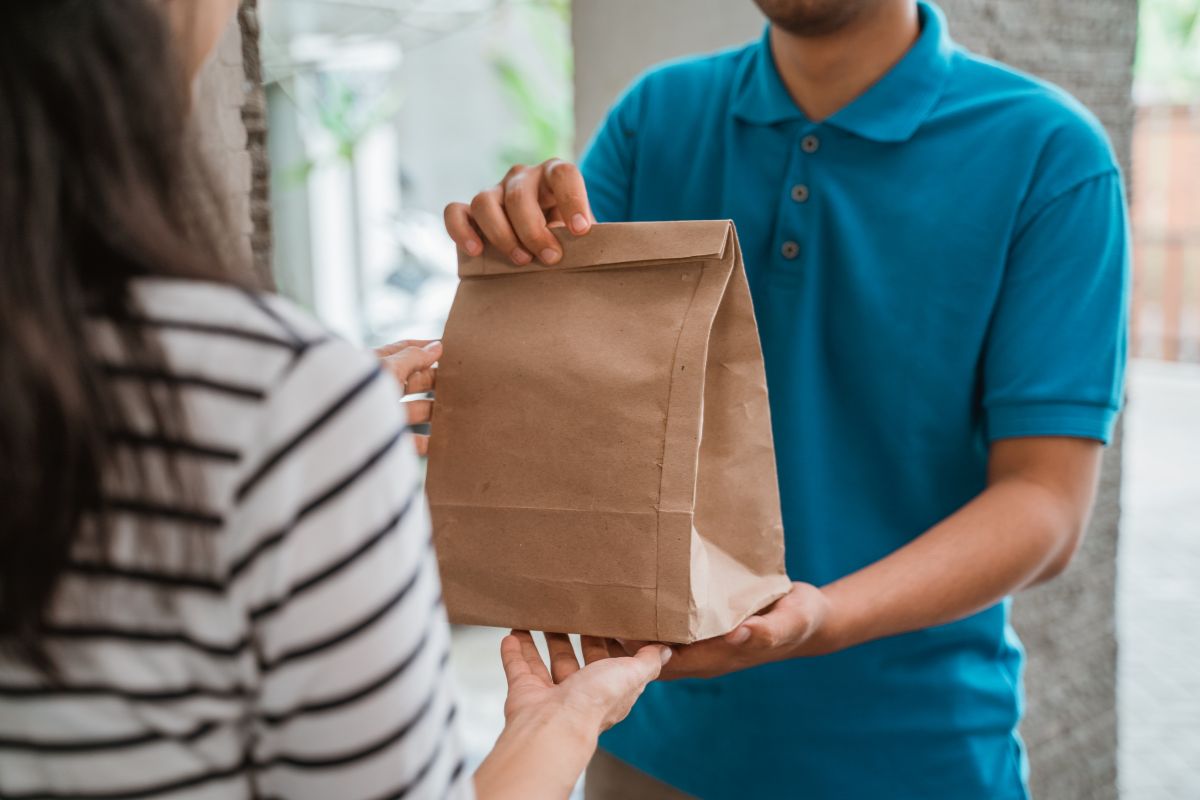
UK | New data has suggested that food delivery orders are now looked at as a "special treat" for most consumers, especially due to high service fees.
Food delivery apps are a familiar part of life in Great Britain, with platforms like Deliveroo, Uber Eats and Just Eat part of the country’s dining habits. From rapid grocery delivery to celebrity-branded menu launches, the sector continues to evolve as companies compete for Britain’s attention (and appetite).
But what drives Britons to use food delivery apps, and what do they most dislike about them? YouGov Profiles data, a 52-week data set based on weekly answers from a British nat rep, provided the answers.
According to the research, the most common reason Britons use food delivery services is “as a special treat,” selected by 31 percent of British adults. Close behind, 29 percent said they order food because they “don’t feel like cooking”.
Other top-listed reasons included not having food available at home, working late or long hours, not being able to pick up food, not having time to pick up food, the weather being too bad to go out, being able to spend more time with family, and allowing more time to do chores at home.
Far fewer cite more practical reasons. Around one in ten say they use delivery services because there is no food available at home (11 percent) or because they are working late or long hours (10 percent).
Only small shares say they order food because the weather is too bad to go out (six percent), because it gives them more time with family (six percent) or because it allows them to do chores at home (five percent).
Despite the popularity of food delivery services, many Britons have clear frustrations with the experience, and costs stand out most strongly.
Four in ten British adults (40 percent) say service fees are too high, making this the leading complaint by a considerable margin. Nearly three in ten (29 percent) say menu items cost more on delivery apps or services than when ordering in-store.
Beyond pricing, Britons also express frustrations with the quality and reliability of deliveries. Around a third say food quality suffers during delivery (32 percent), while 30 percent said food takes too long to arrive. More than a quarter (26 percent) report receiving incorrect orders.
Relatively fewer Britons point to issues such as limited restaurant choice (14 percent), poor customer service (12 percent) or having to tip drivers (10 percent).
The data highlights notable generational differences in attitudes towards food delivery services.
More than half of Gen Z (54 percent) say they dislike that service fees are too high, compared with 23 percent of Baby Boomers. Gen Z are also much more likely to say they dislike that menu items cost more on delivery apps (42 percent versus 16 percent among Baby Boomers).
Younger Britons are additionally more likely to indicate operational frustrations, including incorrect orders and long delivery times. Around a third of Millennials say they dislike both issues.
Older generations appear less dissatisfied overall. Nearly four in ten Baby Boomers (39 percent) say none of the listed frustrations apply to them, rising to 49 percent among the Silent Generation.
Subscribe to the Restaurant & Café newsletter for weekly industry updates and event coverage.