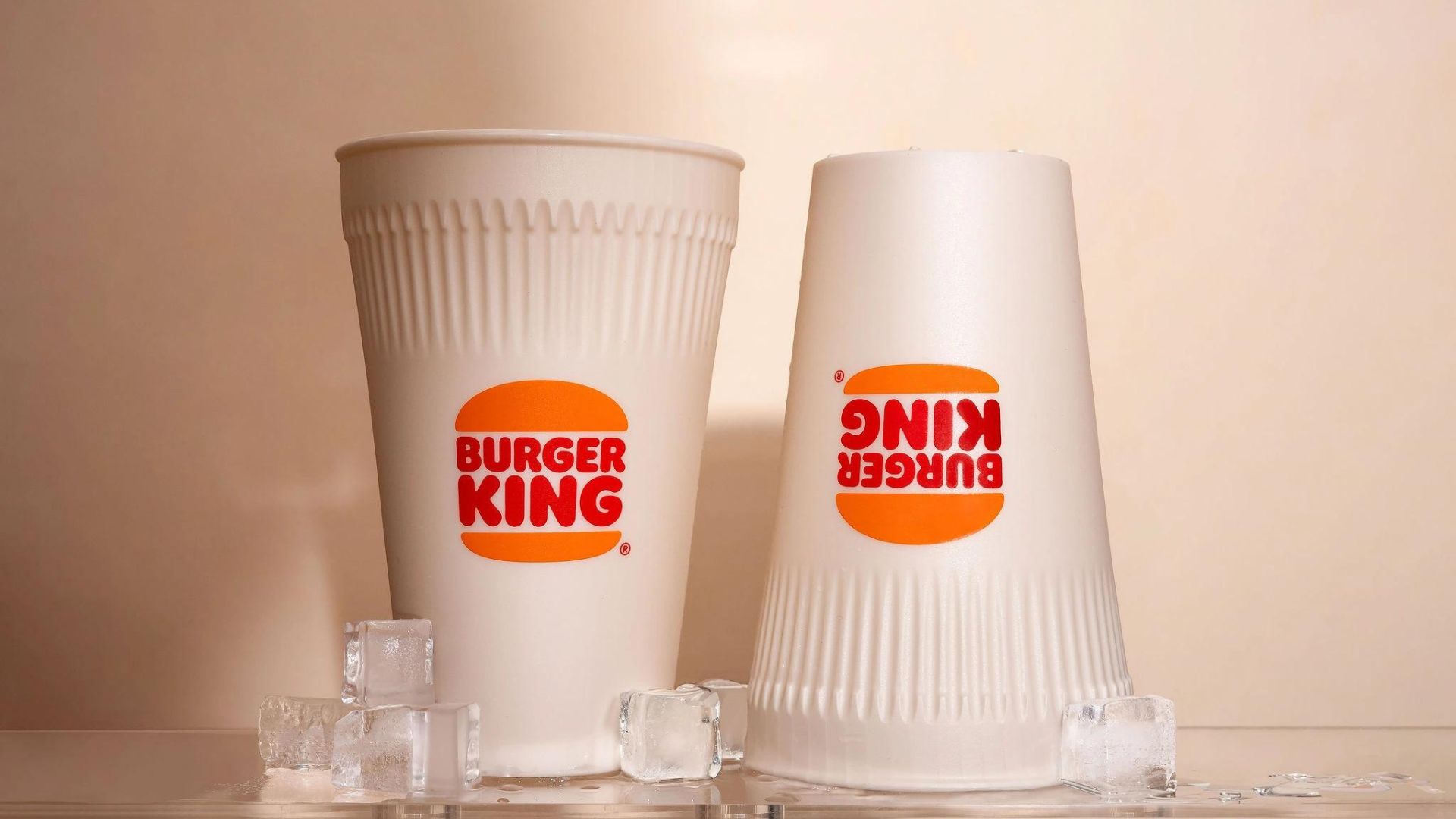
Finnish restaurant and catering company Restel kicked off a pilot with reusable ‘eco cups’ in selected Burger King and Rax restaurants, which the company operates in Finland. The pilot takes place in collaboration with the award-winning material innovation company Sulapac. Through the adoption of reusable Sulapac cups, restaurants can decrease waste and CO2 emissions and avoid harmful microplastic pollution.
As was the case with Restel, many fast-food and event industry operators are pleasantly surprised to learn that reuse doesn’t need to translate into using oil-based plastic. The Sulapac Solid material developed for reusable tableware specifically is 100 percent biobased and its production doesn’t require any hazardous chemicals.
"Our solid material can be efficiently recycled, and it’s also suitable for industrial composting. The compostability certificate is a way to validate the environmental friendliness of the material, as it includes tests for potential ecotoxic effects and heavy metals, for example,” said Heidi Peltola, Head of Product at Sulapac.
In addition, Sulapac Solid has left behind no permanent microplastic, that could pose severe risks to ecosystems and human health.
“All our materials can be digested by naturally occurring microbes. Hence, Sulapac materials do not accumulate in the food chain, unlike conventional plastic.”
The Sulapac eco cups will be used in the selected pilot restaurants for two months. The customer receives the cup from the cashier and returns it after use to the appointed collection tray; The cup can be washed around 200 times. At its end of life, Sulapac takes care of recycling the cups.
“By collaborating with Sulapac, we can mitigate the negative climate and environmental impacts related to single-use and oil-based plastic while advancing the circular bioeconomy,” said Anna Koskinen, Sustainability and Communications Manager at Restel.
The chemical recycling of Sulapac and other biobased biodegradable materials is highly efficient, both in terms of energy consumption and yield. Another notable benefit of the process is that the food contact quality is maintained.
“In other words, we turn Restel’s discarded cups into new drinking cups, following the principles of the circular economy,” added Peltola.
Sulapac’s closed-loop service is available to its hospitality and cosmetics customers worldwide. Currently, its collaboration with Burger King is only available in Finland.
For more news, click here.