Music licensing is a two-way street, supporting the venues that play it and the artists who create it.
In a month where Pacific culture is under a glorious spotlight, hear from award-winning Samoan creatives, a restaurateur and a musician, about the importance of valuing both sides of the story.
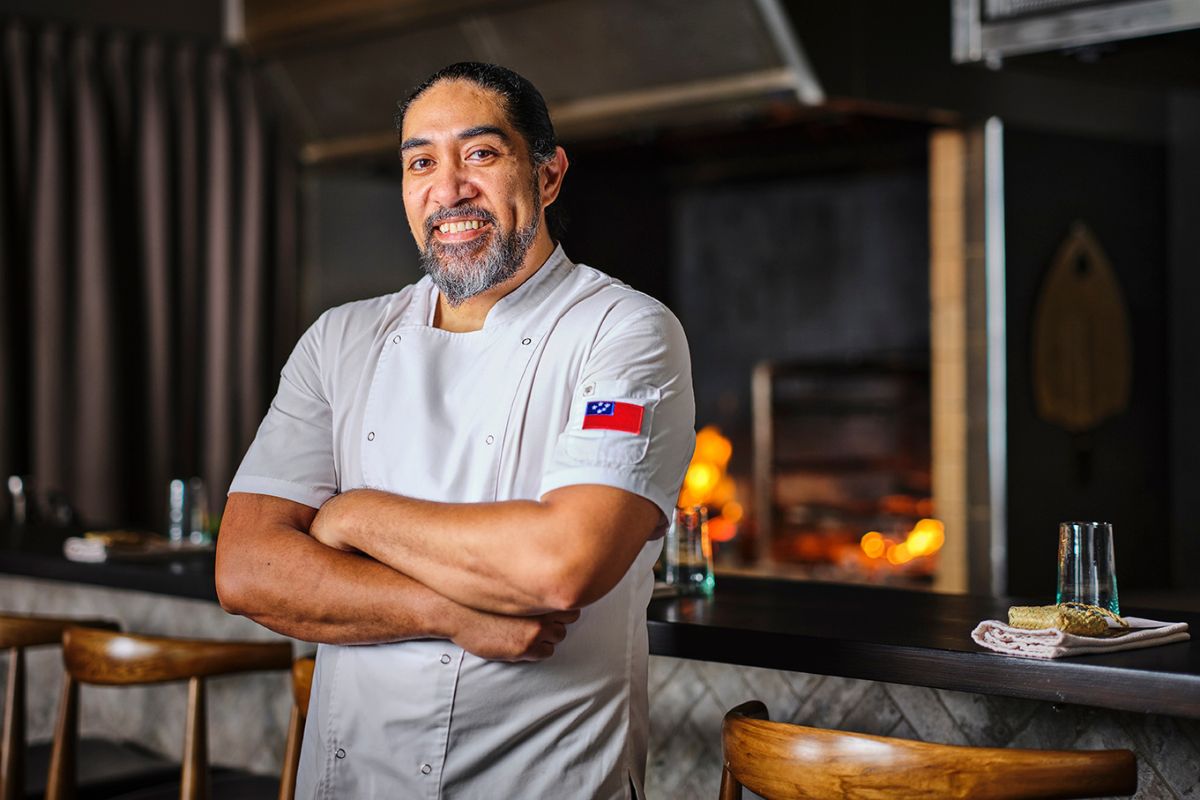
Henry Onesemo, the executive chef and owner of TALA, which was recently named supreme winner at the 2025 Viva Top 50 Restaurant Awards, and even more recently named to Time’s List of 100 Greatest Places in the World, thinks music is one of the most important things in his restaurant.
“The playlist is always Samoan,” he said.
“It’s very important, because there’s a certain vibe when you walk into the restaurant. We’re blasting Samoan songs, we’re playing old Samoan songs, new Samoan songs, modern Samoan songs.”
“We rely solely on the music to kind of tug on that emotional heartstring using sound. It’s very, very important to us.”
David Feauai-Afaese, a screen composer and music co-ordinator who founded LEAO, a Samoan indie rock project, is part of the duo Hanisi Gurue, and currently heads up NOA Records, a label championing a range of music styles, from Samoan post-punk to taonga puoro.
Feauai-Afaese knows from experience that there are so many intangibles that go beyond time and effort when it comes to composing and writing music. “That’s especially true for artists who are intentionally dedicating their own leisure time outside of work to create,” he said.
“Thus to have that hard work, vulnerability and experience be remunerated by the licensing infrastructure facilitated by OneMusic is extremely encouraging, affirming and legitimising to the careers that artists strive for.”
Tala’s incorporation of music into the vibe was very planned. Onesemo wanted to bring it back to what it was like the umukuka (kitchen) back in Samoa, which is often separate from the living area in its own dwelling.
“Everything you would find in that umukuka. So if you’re waking up early in the morning to do your chores, you’ll take your little transistor radio,” he said.
“Everything you see in an umukuka is what Tala feels like. That’s why it naturally feels like you’re in somebody’s home or somebody’s kitchen.”
So how does he choose the music?
“It has to be music that I like!”
A few of those tracks include “Pe Moni Ea” by TheWesternGuide and Rabz, “Salafai e Auelelei” by Luagia Seamau and Samoa Ula Crew, and Lisi’s “685” remix featuring Victor J Sefo and MWays. (“So, it’s very, very varied,” he added.)
Onesemo keeps up with music mostly by listening to Niu FM, first the morning show with Gabz and Regz, then Niu Daily with Mon, and closing out with Sia and Henry on The Rush. “I listen to those three to see what’s going on in the music scene.”
Beyond his culinary mastery, Onesemo is a creative in his own right, he plays the ukulele and even danced professionally for seven years for Disney (he still has an equity card, incredibly). So, he gets the importance of licensing, which is also pretty much non-existent in the world of professional chefs, because it’s extremely difficult to prove who owns a recipe, or who created what.
“But a body of work when it comes to music is very specific to an artist’s taste and to who an artist is. It’s very important work that OneMusic is doing.”
Onesemo believes that restaurants should pay for the music they’re using.
“So that artists can eat!,” he said.
“I use Samoan artists, so that’s the whole idea: Play them, support them, give them the money they’re owed.” He points out that he could not use music at all, and it was a talk that he and his wife had early on in conceiving TALA.
“It’s such a Samoan thing to have the radio blasting and just listen to it, commercials and all. But we realised that subtlety makes much more impact. So to have Samoan music, and on top of that, to support these artists, is quite, quite important.”
It isn’t just hospitality venues like TALA; large-scale events like Pasifika Festival are also important, not just for the income they generate, but for the platforms they provide.
“Those calendar events came out of a desire, if not a need, to platform and celebrate the growing diversity and stories that Aotearoa has become home to,” Feauai-Afaese said.
“For Pacific peoples, performance isn’t just a creative entertainment, but a deeply intrinsic methodology employed to share our history, genealogy, idiosyncrasies, to share and make aware to our wider communities who we are as a people, where we come from and where we are going.”
Feauai-Afaese sums it up succinctly: “In brief, music licensing ensures that people who create music are fairly recognised and paid for their work.” He also believes that, on a broader, more experiential level, accounting for how important music is to social regulation and discourse enables the sustainability and continuation of stories and perspectives shared by artists and groups that might otherwise not be heard from.
“To support artists means to support a future where we encourage connection through active listening, reciprocity, and manaakitanga.”
To hear more about the vital link between artists and the businesses that play them, listen to David Feauai-Afaese on RNZ’s Music 101. He recently spoke with Kara Rickard about his Moana-Indie sound and why music licensing is essential for a thriving creative industry.
Find out more about Tala here, find out more about NOA Records here, and if your hospitality business is not already covered with a OneMusic licence, learn more about it right here.
Because when music works, everyone should get paid for their craft.
Subscribe to the Restaurant & Café newsletter for weekly industry updates and event coverage.