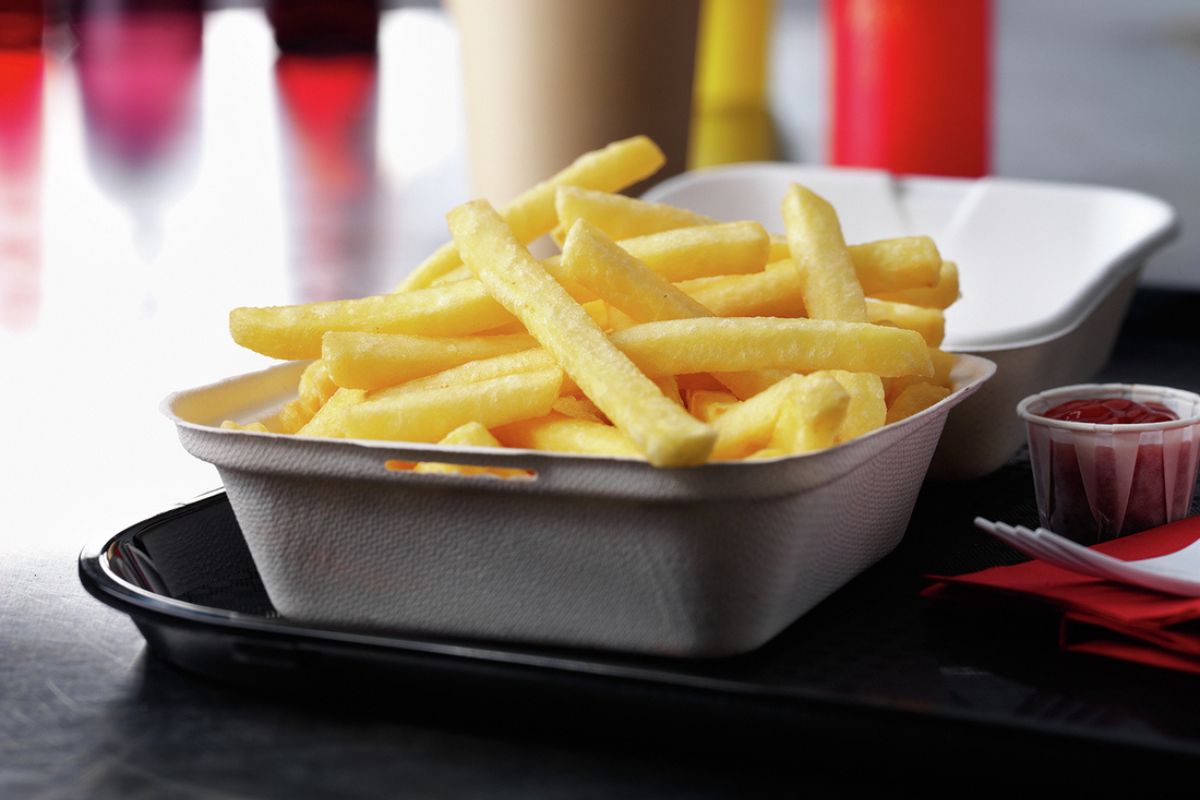
From pass to porch, fries face their toughest shift. McCain Foodservice share the packaging fixes that keep fries crisp and customers coming back for more.
Takeaway and delivery have moved well beyond an afterthought. For cafés, pubs and quick-service venues, off-premise trade now accounts for a significant chunk of weekly revenue, and with that growth comes a different kind of scrutiny.
The dining experience no longer happens under your roof. It plays out on a couch or at a desk, after a journey in a sealed bag. And chips are usually the first thing to give the game away
When customers are dining in, the venue controls every variable – timing, temperature, that critical handover moment. Delivery changes all of that. There’s a larger window between when the fries leave the fryer and when someone actually eats them. That gap is where quality can unravel.
Moisture is the enemy, not the journey
Most operators assume fries suffer because they cool too quickly. Temperature is part of it, but the bigger culprit is what happens before the heat escapes. Hot fries produce steam, and when that steam is trapped in a sealed container, the crisp outer layer softens, and the eating experience drops away.
Your customer can open their order, and the fries are still warm to the touch, but they’ve lost all their crispiness because the steam had nowhere to go.
With around 60% of fries now consumed off-premise*, fries have become one of the most important indicators of quality in a delivery or takeaway order. Customers reach for one almost immediately, they’re easy to benchmark order to order, and they often determine whether someone bothers to reorder at all.
When your chips aren't right, everything else in the bag won't live up to expectation either. That opening impression is hard to shake.
Start with a fry built for the road
No amount of clever packaging will save a chip that isn't top quality and wasn’t designed to travel. Coating, cut size and structure all affect how a fry holds up after it leaves the fryer.
McCain points operators toward fries developed specifically for delivery conditions, such as the McCain SureCrisp™ range, which are formulated to hold texture through a typical delivery run, but even a great product needs to be respected, handled and packed well.
You can pull a perfect batch from the fryer and undo all of it at the packing station. If the container traps steam, the customer is going to notice.
No amount of clever packaging will save a chip that isn't top quality and wasn’t designed to travel. Coating, cut size and structure all affect how a fry holds up after it leaves the fryer.
McCain points operators toward fries developed specifically for delivery conditions, such as the McCain SureCrisp™ range, which are formulated to hold texture through a typical delivery run, but even a great product needs to be respected, handled and packed well.
You can pull a perfect batch from the fryer and undo all of it at the packing station. If the container traps steam, the customer is going to notice.
Four packaging adjustments that make a difference
Rather than overhauling entire systems, McCain’s advice focuses on airflow, moisture and how fries sit in the pack.
- Let steam escape
Sealed containers trap humidity as well as heat. A small amount of ventilation gives fries a fighting chance of staying crisp rather than steaming themselves soft inside the container. - Intercept condensation
Steam that cools inside the pack settles at the base as water. A simple absorbent liner under the fries catches that moisture before it softens the product from below – a low-cost fix that’s easy to overlook. - Keep fries away from high-moisture items
Packing chips tight against burgers or sauced dishes raises humidity inside the bag. Even basic separation within the bag helps them arrive in better shape. - Pack with structure in mind
Fries that tip over or get compressed under heavier items arrive looking less than ideal. Keeping sleeves upright and assembling the bag with some intention improves both texture and presentation at the door.
Run a quick reality check
McCain recommends a simple test: pack fries as you normally would during service, set them aside for 10-15 minutes, then open them as a customer would. Check the inside of the lid for condensation, feel what’s happening at the base, and taste them.
This test will show you what needs fixing far faster than guessing.
Better delivery fries rarely require a full operational overhaul. For most venues, it comes down to a repeatable set of habits at the pass that can be trained and applied consistently, even across the busiest shifts. Paired with a fry designed for takeaway and delivery, like McCain’s SureCrisp™ range, these small changes can make a noticeable difference to how fries arrive.
Built for delivery performance
At McCain Foodservice, the focus is on helping operators get consistent results in delivery, from the right fry through to simple, effective packaging techniques.
For more tips on packaging fries for takeaway and delivery, download the McCain Foodservice Packaging Guide.
Download McCain’s Packaging Guide here
* [Source: Circana CREST Data to September 2025]
Subscribe to the Restaurant & Café newsletter for weekly industry updates and event coverage.