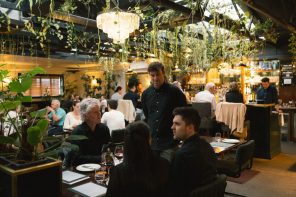
When Tony Stewart announced Clooney’s closure in October last year, he also announced that a new, casual format would open in its place. Come January, however, Clooney remained open and as popular as ever. After 28 years in the fine dining game, Stewart had decided to stick with what he knew best.
Nobu Lee, working at Vue de Monde in Australia, had initially been offered the lead role at Clooney after the iconic Des Harris departed. Hearing that the spot was vacant after a public and well-reported relationship breakdown between Stewart and head chef Jacob Kear, Lee got in touch with Stewart.
Stewart learned a lot from his experience with Kear, who had previously worked at Noma. As much as he believed in a change, he didn’t quite realise how that change would be perceived. “Doing something different isn’t always the right things to do with a business. You can try too hard, or move too far away from what you’re good at. The economic reality of doing something new doesn’t always bode well. It’s interesting from a restaurateurs point of view – the relationship with your chef can make or break your restaurant.”
The menu has been revamped and refreshed, with a selection of starters offering customers “a retrospective look at the Kiwi food culture through canapes.” It features bite-sized takes on fish and chips, L&P and meat and three veg. Is it odd, then, that Stewart claims there is no such thing as true New Zealand cuisine?
“I don’t think we should have a New Zealand cuisine,” he admitted. “We should be focusing on ingredients and allowing chefs to interpret and showcase their culinary skills and influences that they've brought back with them from overseas. The new Clooney is ingredient-driven, and I’m not saying it’s a New Zealand style because it's not, it’s just a style that style that highlights how good we’ve got it here in terms of ingredients.”
An insistence on top-quality ingredients across the industry would bring out the best the country has to offer and bring small producers out of the woodwork. Clooney has around ten direct relationships with local producers – including a hydroponic banana grower out of Matapouri.
“We can still buy new potatoes months after they were first available,” he said. “There’s something wrong with that, I think.” It’s something which is close to home for Stewart, the son of a fruit buyer, and he endeavours to share as much of that knowledge as possible with guests.
“We have a pretty educated client base that appreciates knowledge,” he said. “Information is important, especially when you're talking about New Zealand ingredients: we need to be proud and talk about our suppliers. We wouldn’t be doing our food justice if we didn’t share some of that knowledge.”