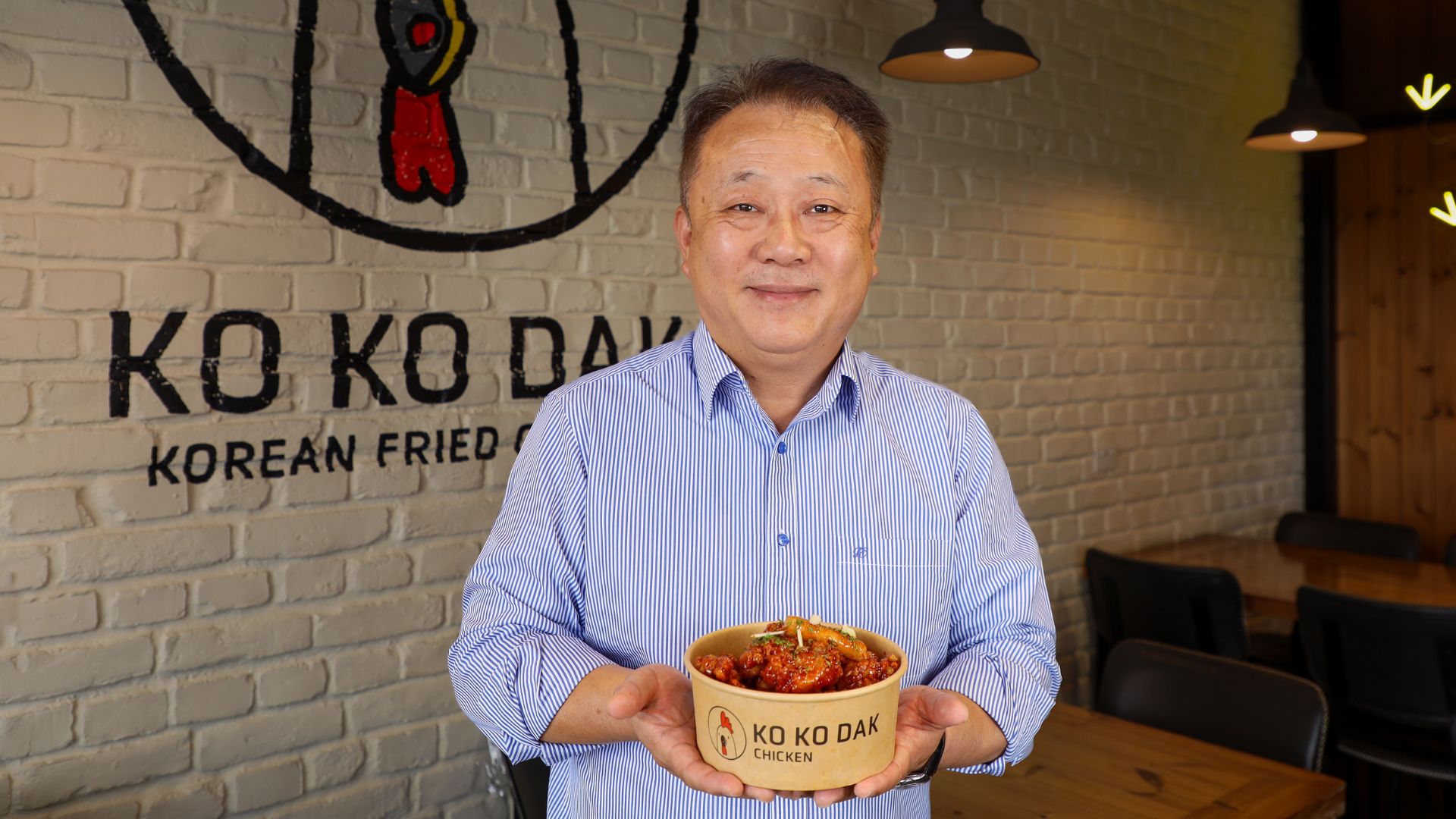
In less than three years, Korean fried chicken chain Ko Ko Dak has grown from a small start-up in an Auckland garage to nine restaurants, and the owner plans further national expansion.
Owner John Song has put its explosive growth down to using high-quality 100 percent New Zealand ingredients - and his secret sauces and coatings.
“Everybody knows American-style fried chicken, but the difference in Korean chicken is the sauce, which gives it such a special, unique taste – we currently have six different flavours. Having some diversity of flavours means we can attract different customers,” said Song.
Before setting up Ko Ko Dak, Song had spent 12 years running sushi restaurants in Auckland, but noticed the market was becoming increasingly crowded. He did his own research and discovered, according to Google Trends search data, that in the years following COVID-19, Kiwis’ interest in Korean fried chicken has slowly but surely increased. Hoping to seize on this opportunity, Song set about developing his recipes with the help of his wife, a chef.
“She loves food, she loves to cook. She would try over and over again to get the recipe for a sauce or coating perfect.”
The first Ko Ko Dak store opened in March of 2021 in Auckland’s Ormiston suburb.
“It was a very difficult time. There were a lot of challenges and lessons to be learned. I was studying franchising throughout that period to improve our approach.”
As more stores opened and more franchises signed up, the demand for ingredients grew, and he began working out of Ko Ko Dak’s Mount Wellington restaurant.
By 2023, Song was running three restaurants himself while also managing six franchised stores. He decided that a dedicated preparation facility would be needed and moved into a commercial kitchen in Onehunga.
“We were growing so quickly, we had to do a lot of work to reassure our franchisees that we could meet their demand for ingredients to build up that trust,” Song said.
With nine stores now in operation - seven in Auckland and two in Tauranga - Song continues to look to expand. A tenth franchise will open soon near Auckland Airport, and after the success of his franchises in Bay of Plenty, he’d also like to expand into other parts of the country. Initially many of the franchises were taken up by Koreans, but Song has been working on translations and standardising his processes, so anyone can take up a franchise, whether or not they speak Korean.
Song has also been helped along, in terms of both finance and guidance, by his ANZ relationship manager, Miki Lee.
“Communication is so important. Without her support, especially with the language barrier, it would have been a lot more difficult.”
Ko Ko Dak's success comes despite ANZ Research data suggesting that growth in the food and beverage industry stalled around the end of 2022. Growth in the sector has remained subdued over the past two years, with inflationary pressures and the increased cost of living likely limiting households' discretionary income.
“It takes courage and resourcefulness to start a business, and the past few years have been challenging for many,” ANZ Managing director of business banking, Lorraine Mapu said.
“Taking a careful look at the market for opportunities – as Ko Ko Dak did - and then coming up with a sound business model, can be the secret sauce.”
Ko Ko Dak started business in the wake of COVID-19, during a period between March and September of 2021, when a wave of small businesses (around 62,000) were registered, twice as many as the same time between 2016 and 2018. According to data from ANZ, gathered by DOT Loves Data, more than 92 percent of these startups are still operating two years later. This is compared to 90 percent of those started in 2018, and 86 percent of those registered in 2016, over the same two-year timeframe.
“Small businesses really are the backbone of our economy - when they do well, the whole country benefits - so it’s crucial they get the support they need,” Mapu said.
Mapu added that ANZ supports small business startups with the bank’s new HOWTWO support programme, which offers fee waivers, a check-in with a business banking specialist and access to in-depth insights during their first two years in business.
“Those insights include a market report from DOT Loves Data, with detailed information about the market they are operating in, to help with business planning.”
Meanwhile, Song has remained focused on the future, and said his priority is simple – sharing the taste of Korean fried chicken with New Zealanders.
“I’m a proud Korean and also a Kiwi. So I’m excited to introduce Korean food to more New Zealanders, which will also help the local economy.”
One piece of advice he had for those starting a new business was to not become too fixated on profits during the early period. Instead, he said focus on refining structure and processes, and never forget why you are doing it.
“We have a passion for good food – we love to eat it, we love to cook it, and we love to share it.”
To read more local news, click here.