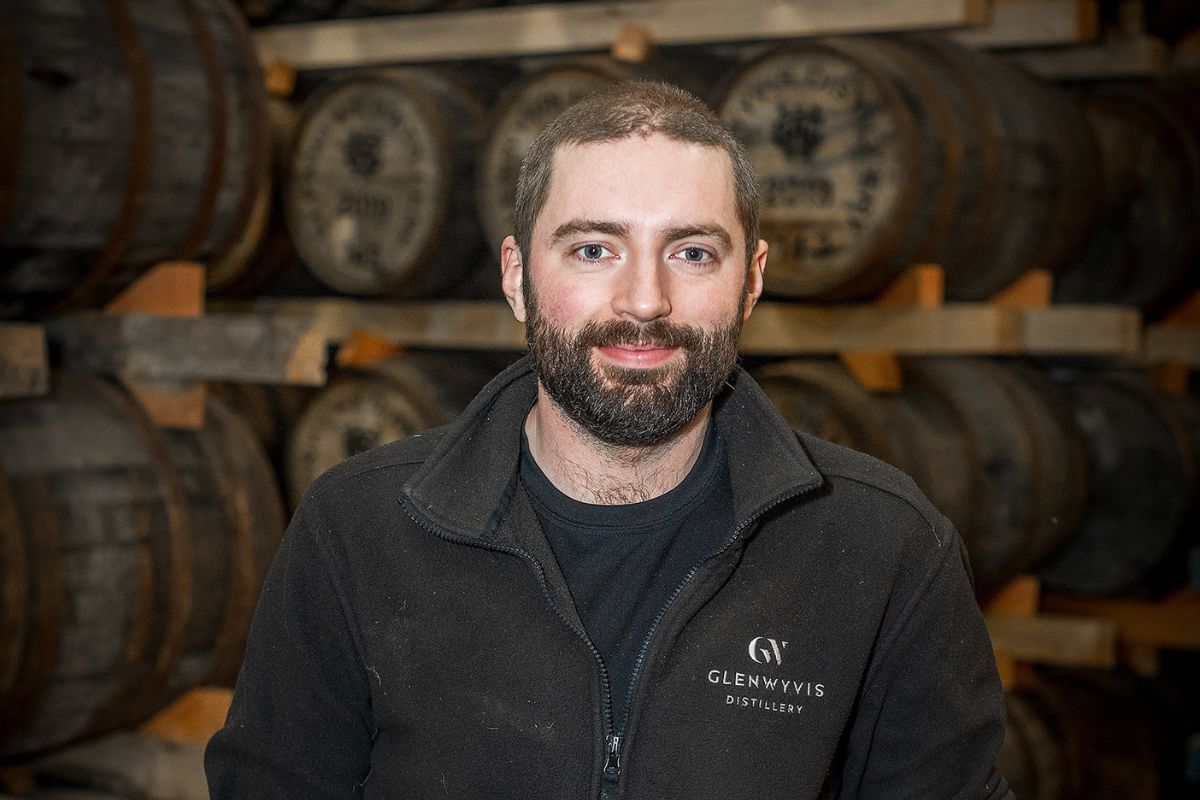
Distillery Manager at GlenWyvis Distillery, Matthew Farmer is ostensibly Scottish - though his American accent may fool you.
As a teenager, Farmer’s family moved to Seattle and as he became older, it became more difficult to soothe the little bits of homesickness - the ‘British’ chocolate was Canadian, Irn-Bru was the wrong colour, no one knew what a blackcurrant was, and haggis was literally illegal.
Whisky was one of the few unadulterated slivers of home. Though Farmer had previously hated what little whisky he had tried - the consequence of his dad stocking entirely peated Scotch - he was starting a fledgling career as a chef and found himself appreciating whisky more and more.
A lot like New Zealand, the Pacific Northwest was following up their explosive craft beer scene with craft spirits and Farmer managed to blag his way into a production job at a start-up distillery. Ten years later, the growing distillery had been consumed into a multinational conglomerate and Farmer was starting a family with his wife - just waiting for the right cue to take the next big step.
That cue came in the form of a newsletter from GlenWyvis Distillery of Dingwall, Scotland, announcing they were hiring.
In his approach to spirit-making, at the core of everything Farmer does is honesty. He finds transparency naturally follows honesty, allowing him to stand behind the decisions he makes - right or wrong. In being honest and transparent, Farmer allows people to build their own story around GlenWyvis’ meticulous brand guidelines. Customers are able to develop their own relation to the drink such as where they first discovered it, when it was and who they were with.
To Farmer, a great spirit has a lot in common with great food, finding inspiration from amazing ingredients and building a recipe up around them. A great spirit should give the impression of being just as carefully -and purposefully- balanced.
GlenWyvis, being a community-owned distillery, comes with its challenges and benefits.
Farmer works to safeguard the distillery for its members, whose priorities are not the same as an entirely for-profit venture. The members aren’t gunning for massive, immediate expansion or huge volumes, they want to see quality products made by using local ingredients and supporting local businesses while protecting the natural environment.
“Being successful is not necessarily measured by finances alone, but by our impact.”
Farmer enjoys that this means GlenWyvis can trade some throughput and explore unusually long fermentation times of at least six days.
By not racing a rising bar of ever-increasing production, no corners have to be cut. Every single drop made is destined for premium single malt, allowing Farmer to put a much larger proportion of GlenWyvis whisky into experimental or specialist casks rather than filling up on ‘bulk’ stock.
Farmer still feels a giddy excitement when unearthing a cask - whether an experiment he’s checking in on or a particularly old example from years ago - as every oak stave is unique. Even a relatively innocuous cask has the capacity to surprise him.
“That sense of discovery just never goes away.”
In the UK, the industry was “hit with the one-two punch” of the Covid-19 pandemic and Brexit. Situated in the Scottish Highlands, GlenWyvis Distillery was able to hibernate through Covid restrictions better than most, as the area usually relies so heavily on seasonal tourism. Production continued in relative safety with just one person at a time, thanks to the distillery’s fortunate physical layout. The business was able to continue laying down stock for the future and keep its small team employed.
However, the restrictions did not come without their challenges. The grand plan for GlenWyvis has always been for their gin to bear the financial burden in the early years, paying the bills while the whisky matures. The premium local product found its best support in hospitality, at events which were lost during lockdown. Even since the re-opening of community events, GlenWyvis has struggled to recover an increasingly crowded gin market - though thankfully, the whisky is just around the corner.
A worldwide shortage of glass has also had a knock-on effect throughout the industry. A lack of bottles means whisky casks aren’t being emptied, warehouses are filling up, and lockdowns have delayed the building of new storage facilities. Production, in some cases, has been completely halted as there is simply nowhere for the product to go.
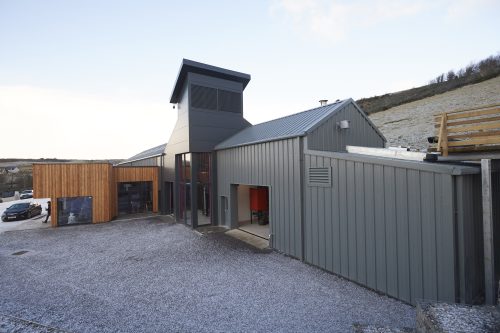
When it comes to sustainability, the whisky industry has a few easy wins that have been in action for decades without prompting. Draff (milled, washed and drained barley) is perfect for animal feed and situated on a working farm, GlenWyvis keep their waste circular.
GlenWyvis Distillery shares a wind turbine and solar panels with its surrounding farm and uses them to run a biomass boiler for steam.
The distilling industry in Scotland has invested heavily in effluent treatment so GlenWyvis Distillery has access to large anaerobic digesters that turn pot ale and spent lees into energy. The waste must still be transported but Farmer hopes the technology continues to get smaller and cheaper to the point the distillery could explore having its own.
Farmer finds the biggest environmental challenge is being at the mercy of a global supply chain as the final product - a highly decorative glass bottle with lots of packaging that inevitably gets shipped all over the world - can quickly undo the good work levied in its production. This is a challenge that spans many industry sectors and at GlenWyvis, Farmer does what he can to choose his suppliers responsibly.
In the future, Farmer hopes to grow the social investment aspect of GlenWyvis, though it is the most unique and challenging part of the business. Nearly at a turning point, Farmer hopes to start bringing tangible benefit back into the community by having a system in place to make it work.
“It’s going to be thrilling to see those seeds mature alongside the whisky.”