Industry leaders have decended on Wellington for the first Hospitality Summit to outline key industry challenges and the future.
The inaugural Hospitality Summit has been held in Wellington this week, bringing hospitality industry stakeholders and government representatives together to tackle the sector’s most pressing challenges.
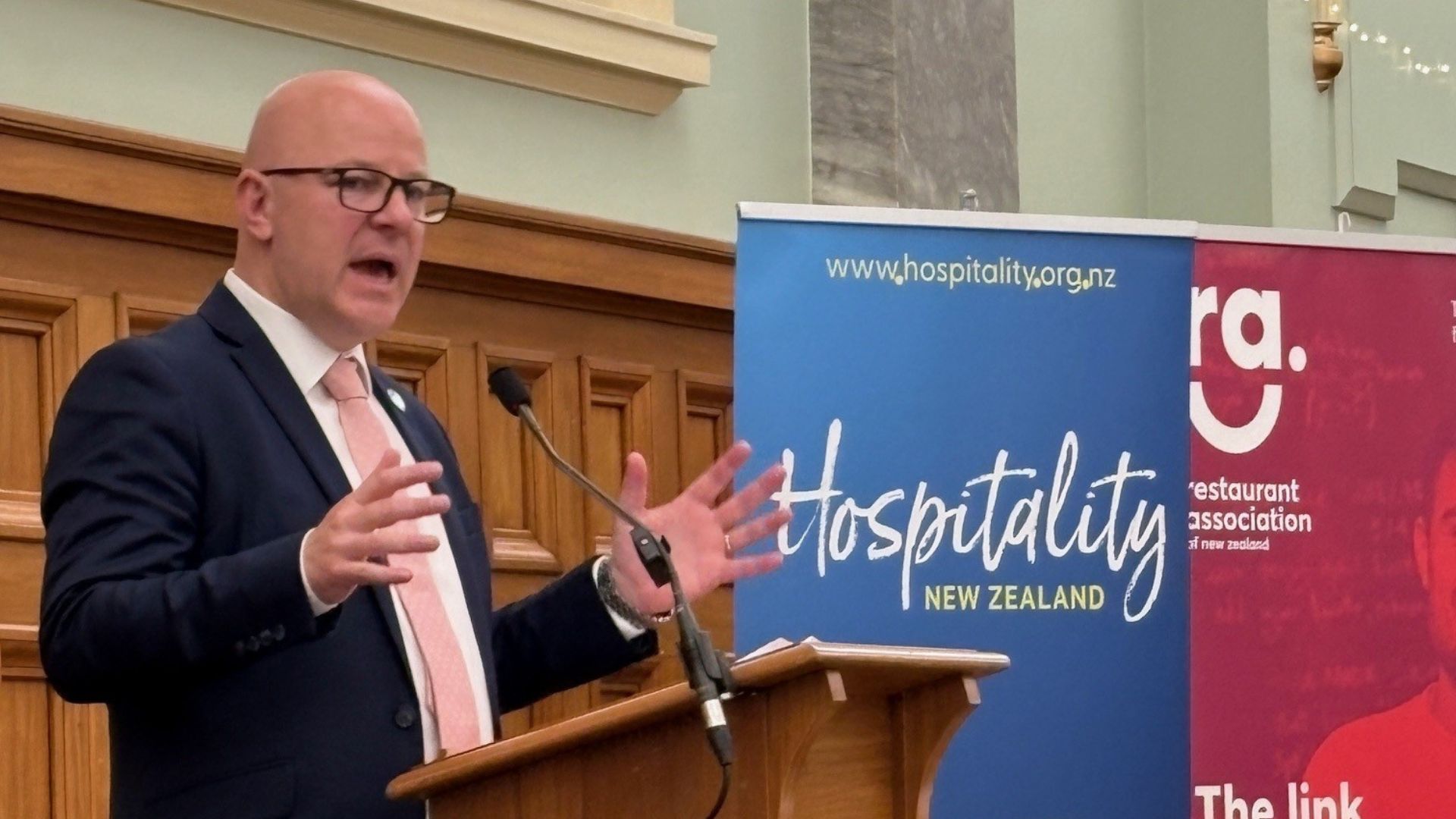
The Summit was held at Parliament Buildings on December 12, 2024 and attended by more than 50 industry stakeholders, alongside government officials including Hon Minister Matt Doocey (Minister for Tourism and Hospitality), Cushla Tangaere-Manuel (Labour spokesperson for Tourism and Hospitality), Celia Wade-Brown QSO (Green spokesperson for Tourism and Hospitality) and Todd Stephenson (ACT spokesperson for Tourism and Hospitality).
It was designed to encourage discussion and collaboration, and to provide an opportunity for the hospitality sector to help shape future government policies.
Industry bodies Hospitality New Zealand and the Restaurant Association of New Zealand, with input from the wider industry and other stakeholders, developed comprehensive draft recommendations that were presented and discussed at the Summit.
These recommendations covered areas from immigration, employment and skills and training, to improving the use of data, easing the burden of compliance and alcohol policy.
They were developed using feedback from a survey and direct engagement with hospitality representatives, with participants invited to share their insights, experiences, and opinions on various aspects of the sector.
The key challenge of worker shortages and skill gaps was a hot topic for the summit. Immigration policies, such as restrictions on visa terms and high wage thresholds for accredited employer visas, have created barriers to attracting and retaining skilled workers. Adopting the HospoCred programme to expedite the process for accredited employers as well as reviewing and amending immigration policy for skilled overseas workers and expanding industry-led training programs like HospoStart and Te Tupu Tahi would help bridge these gaps.
Education and training was also discussed in depth. Making the service sector a career of choice by 2028, by addressing perception issues, promoting clear career pathways, and emphasising the skills of the workforce was highlighted. Standardising e-learning platforms and running campaigns to attract young talent to fostering a culture of learning and growth within the industry was outlined as a priority.
The Summit explored how hospitality business owners face significant hurdles in navigating complex compliance frameworks. Simplifying licensing, employment regulations, and other operational requirements would alleviate these pressures and allow businesses to focus on growth.
As consumer expectations shift towards environmentally responsible practices, the sector has faced mounting costs to implement sustainable solutions. Programmes like the Restaurant Association’s Kai Keepers initiative and targeted subsidies for waste reduction and recycling could play a pivotal role.
The Summit also focussed on how the restaurant sector lacks comprehensive data compared to accommodation, making it challenging for businesses to plan effectively. Providing benchmarking data on costs like food, labour, and overheads, along with tools to interpret spending trends, will support planning and decision-making in this creative industry. Investments in technology and connectivity would further modernise the industry, making it more resilient in a digital age.
A Memorandum of Understanding (MOU) between RANZ and Hospitality NZ was announced at the Summit, solidifying a shared commitment to advocating for supportive policies, promoting training and professional growth opportunities, strengthening the industry’s reputation to attract talent, addressing skills shortages and rising costs, leveraging shared data to guide decision-making, and collaborating on events and initiatives to help the industry thrive.
“This initiative represents a turning point for the hospitality industry. By working collaboratively with the Government, we’ve begun charting a path to address the systemic challenges that have hindered the sector’s potential,” said Marissa Bidois, CEO of the Restaurant Association.
“The Summit has been a landmark event. The MOU and the Government’s commitment to a data project set the stage for meaningful change. Together, we’re building a foundation for a vibrant and sustainable hospitality industry,” said Steve Armitage, Chief Executive of Hospitality NZ.
Hon Matt Doocey, Minister for Tourism and Hospitality, demonstrated the importance of industry-government collaboration.
“It was great to host the Hospitality Summit at Parliament. This event has brought together sector representatives and industry leaders from the sector to discuss the challenges and opportunities they face, including the importance of data for the sector and the recent hospitality workforce survey results,” said Minister Doocey.
“I was pleased to confirm at the Summit that the Restaurant Association, working in partnership with Hospitality NZ, would receive funding from the Tourism Data Partnership Fund to develop hospitality and restaurant spending insights. I have heard the message from the sector the call for better quality data and insights so they can be confident in their decisions and planning.”
The Government’s co-funded data initiative will provide actionable insights into workforce trends, consumer behaviour, and operational efficiencies, enabling evidence-based advocacy and policy-making. A full report outlining the actions agreed upon at the Summit will be published in early 2025.
“We are encouraged by the progress made at the summit and are committed to delivering tangible outcomes for the industry. Our collaborative efforts with the Government and other stakeholders will ensure that hospitality continues to play a vital role in New Zealand’s economy and culture,” added Armitage.
Bidois said the roadmap developed at the summit is only the beginning.
“By continuing to work together, we can transform these recommendations into actionable solutions that create a thriving future for hospitality in New Zealand,” She added.
A range of quick wins and medium- to long-term opportunities relating to these recommendations were discussed and developed further at the Summit. These will be compiled into a roadmap for the hospitality industry which will be published early in 2025.
Speaking at the Summit, Hon. Matt Doocey, the Minister for Tourism and Hospitality, welcomed the recommendations. He also announced the Government’s commitment to co-fund a data project with the Restaurant Association and Hospitality NZ to provide reliable data for New Zealand's hospitality sector.
More news here.