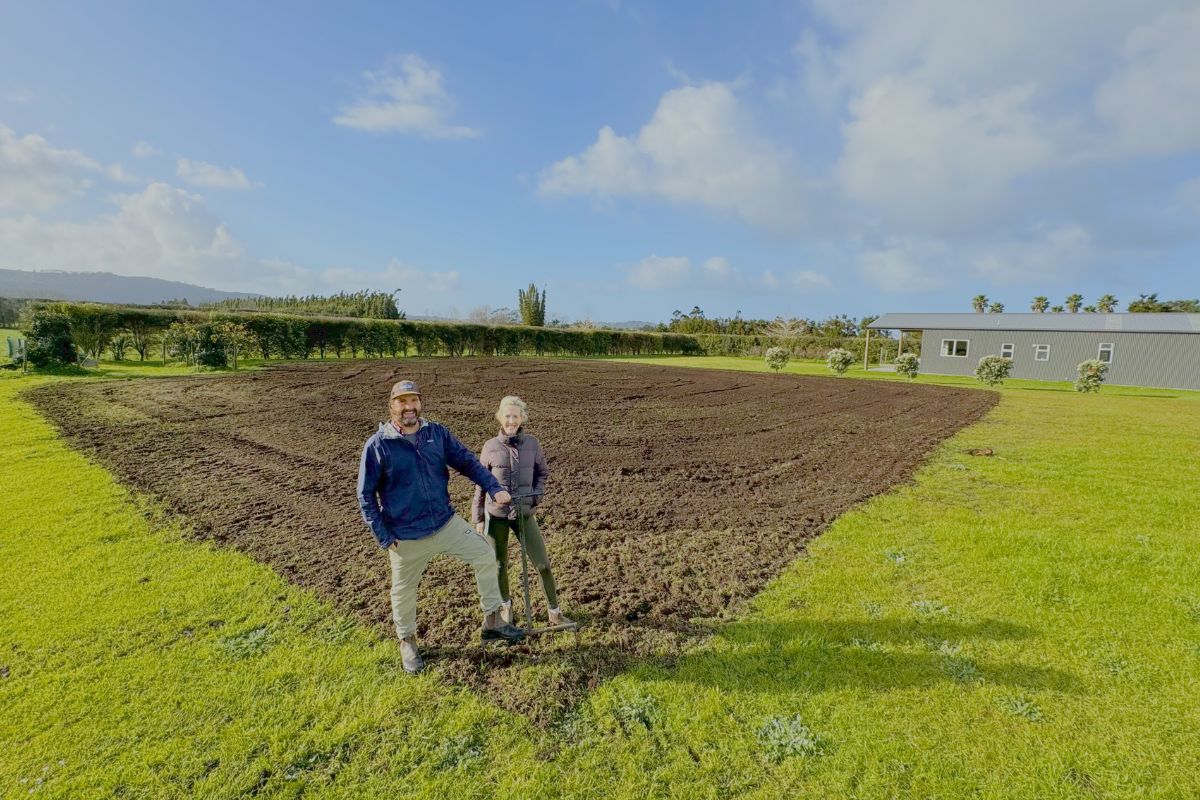
Eat Your Greens has built a reputation for quality and connection, sparked by the dream of Chef Ian King.
After more than a decade working in top kitchens across New Zealand and Australia, former chef Ian King had seen enough limp, lifeless salad greens. Too often, produce intended to be fresh and nourishing arrived wilted and tasteless, a result of long supply chains and little thought given to how it was grown. With a background in Geography and Environmental Science, Ian began to wonder: what if he could grow something better himself? From the ground up.
In 2017, Ian began trialling microgreens in a greenhouse at Little & Friday, a bakery in Belmont.
“I started on a whim, just to see if I could do it,” he recalled, and the promising results encouraged him to keep going. His wife Kat, who had already been offering behind-the-scenes input, stepped into a formal role this year, bringing her commercial background to support the brand’s growth.
A shared vision for conscious growing brought Ian and Kat together with local landowners Wendy and Garry Inger, long-time advocates of chemical-free farming. Generous with both their land and their support, the Ingers’ offered space on their Omaha Flats property for Eat Your Greens to take root. The two families now share more than just a driveway.
“We do produce swaps with them, lemons and avocados for salad greens, classic Kiwi neighbour stuff,” said Kat.
At Eat Your Greens, everything begins and ends with soil. Unlike hydroponic systems, which Ian describes as “factory farming,” the couple believes soil-grown crops offer superior flavour, nutrition and shelf life.
“We’ve visited those large hydroponic facilities,” Ian said, “Honestly, it’s not a farm, it’s a factory, we just didn’t want to grow that way.”
Their crops grow in certified organic peat, chosen for its ability to support deep root systems and nutrient density. Companion planting encourages pollinators and deters pests, while all green waste is composted on-site and returned to the soil in a closed-loop system.
“I suppose I always leaned towards conservation,” Ian added. “Rather than pouring out all sorts of hideous things on the land to make a profit.”
Their regenerative approach extends beyond the growing process. Packaging, for instance, has been a complex challenge, one that’s taken years of trial, error, and determination. From extensive research and testing, to trialling compostable films from all over the world, Kat and Ian have explored it all. “We tried so many options that just didn’t work,” Kat said.
“Some weren’t resealable, others let too much air in and therefore compromised shelf life,” which, she adds, ultimately increased food waste, exactly what Eat Your Greens aims to prevent. In the end, they partnered with Convex to develop a recyclable, resealable format compatible with New Zealand’s soft plastics scheme, the best balance between performance and responsibility.
“We’d love a home-compostable material that performs,” Kat added.
“But right now, it just doesn’t exist.”
Today, that same attention to detail guides everything they grow. Their retail salad mix, often featuring rare Italian and French lettuces, red vein sorrel, and nasturtium leaves, has become a consistent favourite.
“You won’t find these in your average salad bag,” Ian noted.
For restaurants, their heirloom tomatoes, pea shoots, and shishitos are especially popular, with even more varieties planned for next summer.
Their customer list now stretches nationwide. From early supporters like Coco’s Cantina and Odette’s Eatery to premium grocers like Farro and New World, Eat Your Greens has built a reputation for quality and connection. But they haven’t lost touch with their roots. This summer, they’re reopening their well-loved roadside stall at their farm, a decision driven by local demand and a desire to stay flexible.
“It’s part of what they call the Golden Mile,” Kat said.
“Full of honesty boxes, growers, and good energy.”
Through their growth, their philosophy remains rooted in purpose.
“We’re not here to be everything to everyone, we just want to grow really good food, for people who care about where it comes from,” said Kat.
“We’re farming like it’s 1920, and we’re proud of it.”
It’s more than just a mindset; it’s their tagline, capturing everything Eat Your Greens stands for.
By Jonty Williams, Rainger & Rolfe
More news here.