USA | New data from Square has highlighted the current state of the US restaurant industry, with strong growth in the fast-casual sector.
Financial and commerce services company Square has unveiled new data on the restaurant industry in 2025, which is finding its footing amid economic uncertainty.
In Q1 2025, Square found that the average tip on food and beverage transactions was 15.17 percent, and this continued to fall into Q2 with the average tip coming in at 14.99 percent, aligned to dropping consumer confidence in the economy.
Bars regularly receive the highest tips; in Q1 their average tip was 17.36 percent on each transaction, though this too fell to 16.96 percent in Q2. Cafés and quick-service restaurants received 14.72 percent and 14.64 percent in Q1, respectively, and dropped to 14.57 percent and 14.2 percent in Q2. Tips at full-service restaurants also declined from 14.76 percent in Q1 to 14.64 percent in Q2.
“As previous Square research has underlined, tips make up a major part of workers’ wages, the average restaurant employee earned nearly 23 percent of their income in tips in 2024,” said Ming-Tai Huh, Head of Food and Beverage at Square.
“As consumer confidence in the economy shifts and tips fall, workers are taking home less which could lead to a return to labour uncertainties for the industry, adding to the crunch local restaurants are continuing to feel.”
Square and leading hospitality accounting firm Paperchase have partnered to combine Square's transaction data and Paperchase's restaurant accounting and financial services data to evaluate how hospitality profitability is faring against the backdrop of 2025's economic volatility. The data weighs the differences between quick-service and fast casual restaurants versus fine dining restaurants across sales, margins, growth, and cost efficiency.
Overall, QSRs and fast casual concepts consistently outperform fine dining in consistency, efficiency, and scalability, with consumers continuing to seek value for their buck amid economic uncertainty:
- In terms of sales growth, fast casual restaurants peaked at 9.3 percent in Q4 2024, with a moderation down to .9 percent in 2025. QSRs peaked at 15.8 percent in Q4 2024 with continued strength into 2025 between 8.7 percent and 9.1 percent.
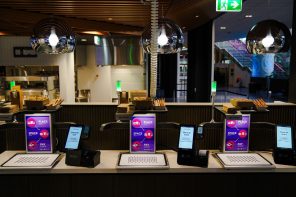
- As Square research has previously shown, labour margins are steadily trending downward for both fast casual and quick-service concepts, indicating improved labour efficiency or cost reduction, likely enabled by investment in technology like self-serve kiosks. Fast casual restaurants using Paperchase see a lean and consistent margin between 17.4 percent and 21.2 percent between 2024 and early 2025, while QSRs trended down from 21.1 percent in 2024 to 18.8 percent in 2025.
- EBITDA margins1 are strong and steady for both QSRs and fast casual businesses, at 18.9 percent and 23.6 percent in Q1 2025, respectively. Both kinds of businesses show resiliency, scalability, and adaptability, underscoring the advantages of operating standardised and leaner restaurant business models amid economic uncertainty.
“Opening the business from scratch, you have so many worries. You gotta train employees, you gotta buy food, you gotta pay rent, make sure the water's good, make sure the plumbing's good. But inventory, employees, labour, Square helps me track everything I need to do,” said Quie Slobert, COO of Charles Pan-Fried Chicken, a fast-casual restaurant chain in New York City that uses both Square and Paperchase.
“In a business, you only control two things, and that’s labour and inventory. Using tools to track what we sell and forecast is amazing because you can do the math yourself, but this business is a numbers game.”
More news here.