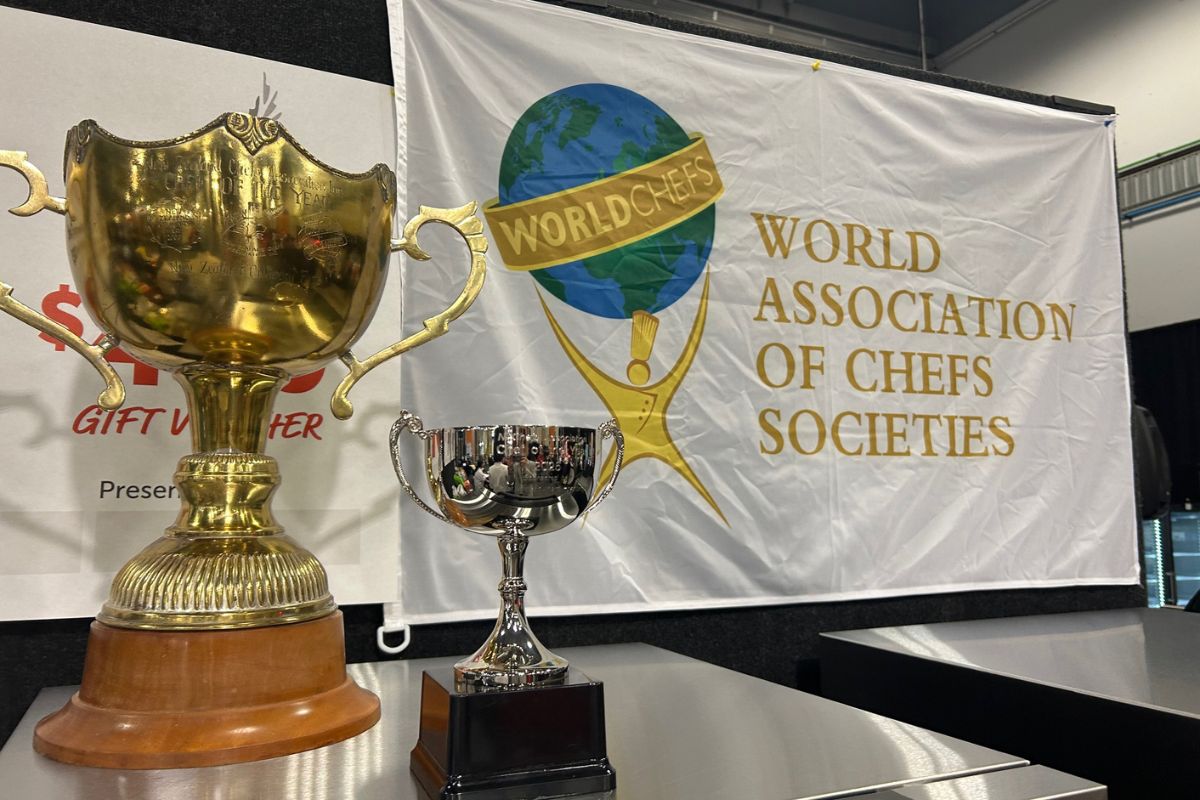
Rick Stephen, Global Vice President of the World Chefs Association, was in Auckland for the NZ Chefs Championships at Fine Foods New Zealand 2025.
Stephen said that championships were incredibly important for a chef’s personal growth.
“When I used to compete in the competition, we used to train and practice, and then you try and develop techniques or different dishes that you probably would not do in a normal circumstance. So I used to always think that I'd virtually gain four years of training just from that one competition,” he said.
Stephen considered hygiene, food waste, sustainability and taste as the most important elements for competing chefs to have during competitions. He said that if chefs are cooking for four, then cook for four, don’t cook for six or eight. Judges will be on the lookout for how many products chefs use and how much of that ends up on the plate, as well as their techniques.
“We want to ensure that it’s a cooking competition, so we want to see techniques. We don’t want to see chefs using all these moulds and things like that. Use one or two, but we want to see chefs using some hand-to-hand techniques and utilisation of all the products.”
He added that the most crucial element to consider in a competition was the time frame.
“If you’re given two hours to do it, then make sure you finish in two hours.”
Whether it be farm to plate or sea to table, chefs need to understand where each product comes from. They need to know how that farmer got that product, and that it wasn’t just a matter of going to the butcher and getting it.
Stephen said that when chefs are able to appreciate it, then they will respect the ingredient more.
“You need to be able to tell the story about how you came up with the dish, and why you’ve used that certain product, and why you chose it from that certain region. You need to have a good understanding of this, especially when heading into an international competition.”
He said that an example of this would be New Zealand lamb.
“Ireland has great lamb, Australia has great lamb, Scotland has great lamb. So you’ve got to make sure that they understand why the New Zealand lamb is good. And you only know that because you have to study it yourself, you can’t just pretend you know.”
Competitions like the NZ Chef Championships are essential for young and emerging chefs in Stephen’s opinion. He said competitions are designed to test chefs abilities. Mistakes are welcome, as competitors are able to learn from those mistakes and elevate their future dishes. He reiterated the importance of not giving up, learning and gaining feedback. He added that it was better for young chefs to have constructive feedback so they can learn and go on to the next step.
According to Stephen, every chef should consider entering competitions, as it isn’t competing against others; it’s competing against themselves. Every chef starts with 100 marks and will lose points for making mistakes or doing something wrong. He said that practice makes perfect, and chefs will become attuned to proper procedures, but a chef always has to have the passion to succeed.
“I always say cook from the heart. Cook what you feel is great, just make it look good on the plate.”
More news here.