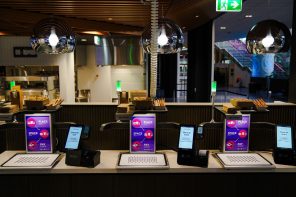
The Coffee Club has become the first national partner of Chatty Café NZ, taking the initiative into selected stores and helping lift its network to 39 venues nationwide within ten weeks of launch.
The principle is straightforward: a café sets aside a table at a regular time, with a trained, police-vetted volunteer host there to welcome anyone who wants to sit down and talk.
For The Coffee Club, it is a natural community partnership. Cafés already operate as social spaces, while a recognised national network gives Chatty Café familiar venues and considerably greater reach than building the programme café by café.
Nicole Mowatt, Assistant Marketing Manager at The Coffee Club, said the business saw the value of connection every day, whether through friends catching up, regular customers talking or people meeting for the first time.
But there is a harder question behind the initiative. Do people experiencing loneliness actually want to identify themselves by sitting at a designated table for people looking for company?
Perhaps an even bigger issue is who we picture when we talk about loneliness.
There is a tendency for activities designed to tackle loneliness and social disconnection to be directed towards older adults. Certainly, isolation can become a serious issue later in life, but the assumption that loneliness is predominantly an older-person problem does not fit the New Zealand data.
The 2024/25 New Zealand Health Survey found 5.5 percent of men aged 25 to 34 reported feeling lonely most or all of the time during the previous four weeks. That was the highest rate among any male age group and compared with 2.8 percent of men aged 65 to 74 and 2.3 percent of those aged 75-plus. Women aged 25 to 34 recorded a similarly high 5.9 percent.
The challenge for Chatty Café may therefore begin before anyone reaches the table.
The initiative sits within GrandFriends, whose established focus is on connecting older people and families. Chatty Café states that it can connect people “young and old”, but its website, imagery and overall presentation retain a strong older-adult feel.
That positioning matters. If someone in their late 20s or early 30s does not see themselves reflected in the programme, the question of whether they will walk into a café and sit at its designated table may already have been answered.
Consider the 30-year-old man working remotely, living alone or simply finding that his social circle has contracted. He may be lonely without ever describing himself that way. Would he then deliberately take a seat beneath a sign that effectively tells everyone around him he has come looking for someone to talk to?
Long shared tables are already common across hospitality, from cafés to pubs, and offer much of the same social opportunity without the structure of a formal programme. There is no joining fee for the operator, no designated sign identifying the table with loneliness or being alone, and no fixed time at which someone has to turn up.
Often these tables carry newspapers, magazines or other shared material, giving customers an easy opening for conversation if they want it. Someone can sit down alone without explanation, read the paper, have a coffee and perhaps talk to the person alongside them. The interaction remains optional and, importantly, unlabelled.
Chatty Café does add something a communal table cannot guarantee: someone willing to make the first move.
People are perfectly capable of sharing a table without exchanging a word. A volunteer host removes that initial social uncertainty, welcomes newcomers and creates permission for conversation. That may ultimately be the strongest element of the concept.
For café operators, the question is whether the formal programme brings incremental customers through the door who would otherwise have stayed away, or whether it largely attracts people who are already comfortable joining organised social activities.
And for Chatty Café, growth may need to mean more than adding venues.
If loneliness among younger adults is part of the problem the initiative wants to address, its language, imagery, venue times and presentation may need to broaden with the network. The people who most need conversation will not necessarily look like the people we have traditionally assumed are lonely.
Getting the table into more cafés is relatively straightforward. Getting someone who does not identify as lonely to choose to sit at it is the considerably harder challenge.
Read more here.