Will the closure of celebrity chef Josh Emett’s flagship Dunedin restaurant finally spur the Government into meaningful action?
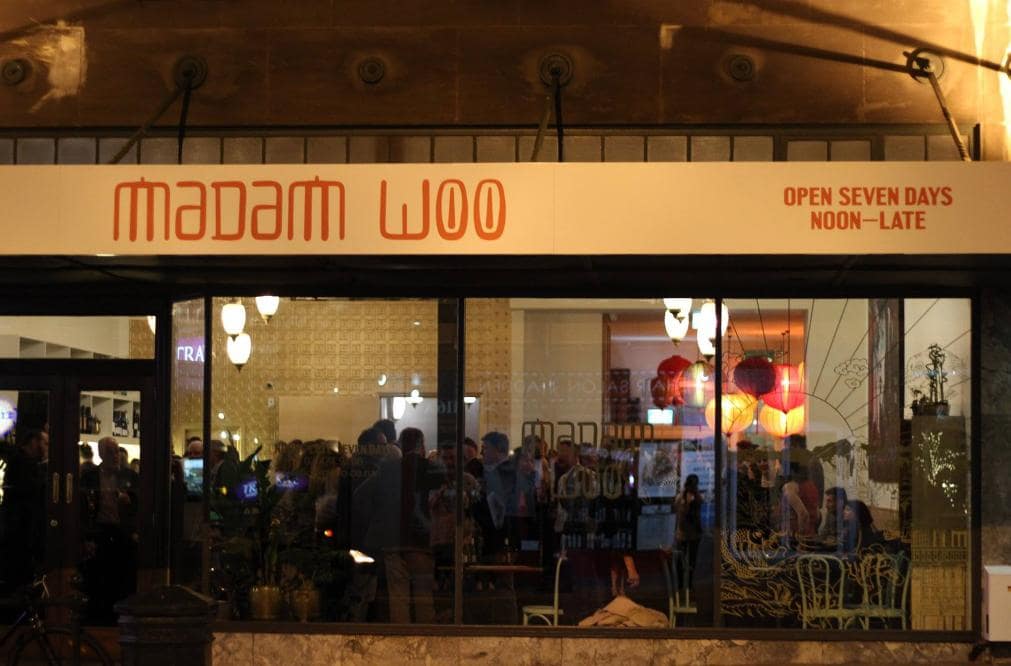
The end of the much-anticipated Madam Woo was in stark contrast to the fanfare that accompanied its launch in September 2015. It was the third branch of the Asian-fusion restaurant, and following its success in Takapuna and Auckland, business partners Josh Emett and Fleur Caulton were excited to bring the concept even further south.
“Josh and I both love the vibe of Dunedin,” Caulton said at the time. “It has history and a real sense of itself but it's also progressive and has a great energy and artistic component that we think will really embrace Madam Woo.”
Just over three years on, however, the end was announced through a typed note taped to the door of the Stuart St venue.
“Unfortunately due to ongoing skilled labour shortages, we have had to make the incredibly hard decision to close Madam Woo Dunedin … to focus our time and resources on our other establishments.”
While the restaurant was still turning a profit, Caulton admitted that the Dunedin branch was “probably the lowest performing” branch in the country and said that the amount of time spent on supporting the Dunedin branch was taking time away from the rest of the company.
While the lack of hospitality professionals is affecting restaurants and cafés all around the country, Dunedin had its own unique set of challenges. The fact that students account for 20 percent of the population meant that the restaurant would have to deal with a migratory population of young workers. Students are unlikely to stay in Dunedin over summer holidays, which is when dining-out is at its peak. Furthermore, the perceived lack of career options in hospitality means that once students finish their three-year degree, they leave the city to find jobs relevant to their study.
“We pour a hell of a lot into training people, but once they finish their degree, they're off,” Madam Woo manager Kevin Beckett said. “To find people with more than five years' experience, who can manage and run a kitchen, or be 2IC is not an easy task at all.”
The closure has once again brought the hospitality industry’s fraught relationship with immigration to the fore. Employers in Queenstown have taken Immigration Minister Ian Lees-Galloway to task last year over the insufficient immigration system which has left them struggling to find, and retain, staff. One café owner asked the minister for help to find workers, as well as streamlining the visa process for existing workers.
“I’m just a small business,” the owner explained. “I have seven staff. Six of them are on visas.”
Lees-Galloway acknowledged that there were special factors in Queenstown’s difficulties in finding staff.
“You guys have some really particular needs here that might mean a long-term plan that delivers for other parts of the country might still mean that you guys have got a tougher road to hoe.”
“Globally, the hospitality industry is feeling the pinch, with a recognised shortage of skilled staff in both kitchen and front of house roles around the world,” said Restaurant Association CEO Marisa Bidois. “In New Zealand feedback is that the hospitality industry has acute recruiting issues. It is harder than ever to find quality hospitality employees who meet a business’ skill requirements.”
The problem isn’t new. A 2016 survey found that only 1 percent of hospitality establishments were able to find a suitable manager through Work and Income, and 32 percent found that it took over six months to find a suitable candidate. More recently, a study conducted by the Restaurant Association found that 90 percent of employers who have recruited for a manager over the past year have struggled to fill the role, with 55 percent saying that they had to repeatedly advertise before a suitable candidate was found. On the back of these figures, the Restaurant Association launched a campaign in October to make restaurant and café managers eligible for fast-tracked immigration permits under a new proposal by the government. Despite the well-documented worker shortage, these roles are still not on the list. Under the proposed changes, employers won’t have to prove that there are no capable candidates in New Zealand and overseas workers will find it easier to be granted work visas.
The move was welcomed by the hospitality industry, with the Restaurant Association of New Zealand applying to add café and restaurant managers to the list, as they are not currently on any priority list despite the well-documented worker shortage. Whether or not the proposal has been accepted will be announced in February. In the meantime, however, Lee-Galloway has announced plans to introduce a regional skills shortage list while will make it easier for employers to fill job vacancies with migrants in specific areas.
“There is no denying that the recruitment challenges are there, but with our support and the industry’s willingness to embrace practical solutions to assist we see that there is an opportunity to build on some real solutions to our sector’s current skilled staff shortages,” Bidois said.