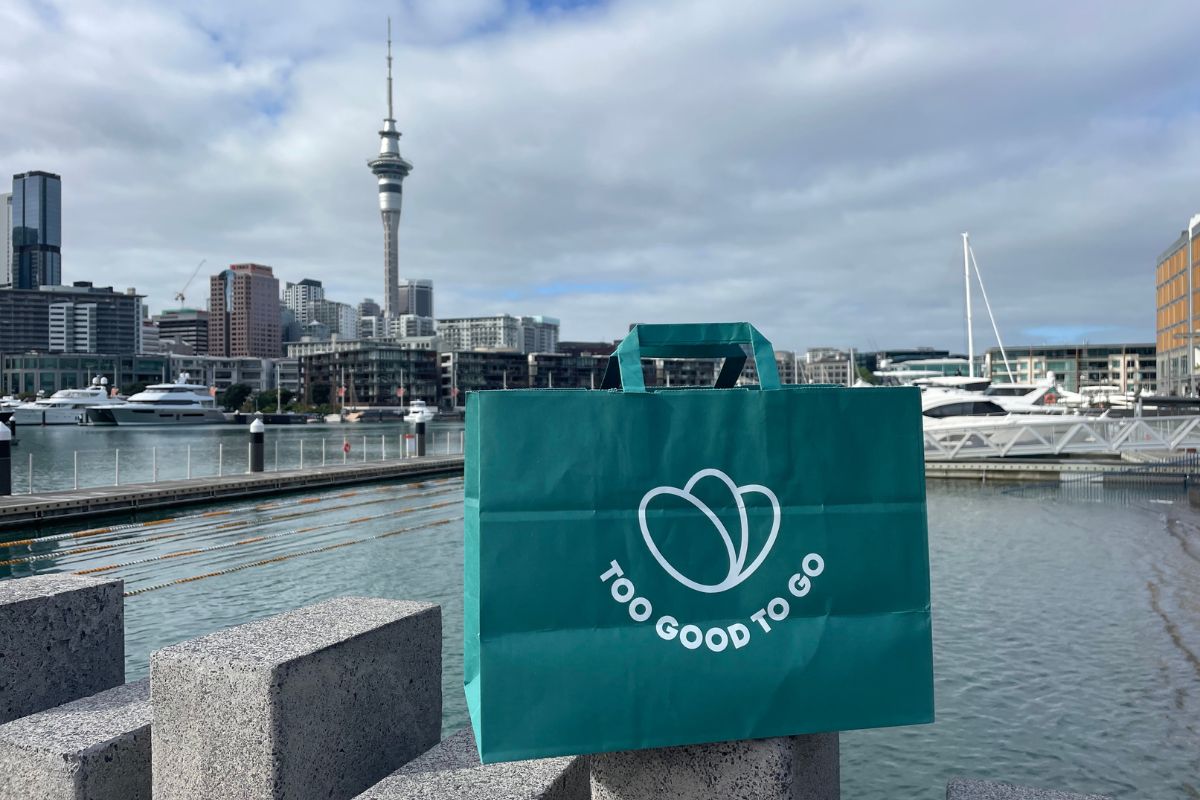
Social impact company Too Good To Go has officially launched in Auckland, aiming to reduce food waste throughout the country.
Too Good To Go, the world's largest consumer marketplace for surplus food, has announced it will launch in New Zealand, starting in Auckland. The Danish-born social impact company is on a mission to help Kiwis halve food waste by 2030, in line with the United Nations’ Sustainable Development Goal.
Too Good To Go’s ‘Surprise Bags’ have allowed customers to rescue good food from going to waste with ease at great value for money, from a variety of local stores, cafes and restaurants. It has been described as a “win-win-win” business model: Kiwis get access to good food at a discounted rate; business partners make money from their surplus food; and together help tackle climate change by reducing food waste.
More than 60 local businesses have already signed on for the launch, including local favourites like Daily Bread, Crave Cafe, Beau Deli, Rollers Bakery, Catroux and Beabeas, alongside household names like Bakers Delight, Muffin Break and Roll’d. Conversations are already underway to continuously add more partners, both in Auckland and beyond, as Too Good To Go expands throughout the country in 2026.
Around 40 percent of all the food produced around the world is wasted, as much as 2.5 billion tonnes each year (WWF, 2021), accounting for 10 percent of all greenhouse gas emissions worldwide (WWF, 2024). This global problem has affected New Zealand locally, with NZD 3 billion worth of food wasted annually in the home, which is an average of NZD 1,364 lost on food waste per household, per year.
“We are obsessed with reducing food waste,” said Joost Rietveld, Country Director of Too Good To Go Aotearoa.
“It’s what our entire business is focused on across 19 other countries, with Aotearoa now proudly our 20th.”
Rietveld said that with the country’s vibrant food culture and clear recognition of the value of food, New Zealand was the obvious next step for Too Good To Go’s expansion across Asia Pacific.
“There is such a strong commitment to sustainability here, making it the perfect match for our mission to inspire and empower everyone to fight food waste together. We’re excited to invite Kiwis to join our global community and start saving their favourite foods from going to waste,” he said.
“We’ve hired a local team and set up an office in Auckland to drive our contribution to reducing food waste with local New Zealand businesses. Together, we can make a real impact and create a more sustainable future.”
Mette Lykke, Global CEO of Too Good To Go, said it was exciting to launch in New Zealand, which has become the 20th country in its portfolio. Lykke added that this is a significant step forward towards the vision of a planet without food waste.
“We cannot afford to waste food; it is too valuable for society, the economy, and the planet. In fact, of all the climate challenges facing us, food waste is the dumbest, and one that we can fix without people having to give something up,” said Lykke.
“We invite everyone in New Zealand to join our global community of 120 million users and 180,000 business partners and start making a difference, one meal at a time, bite by bite.”
Scott Randles, Area Manager for Bakers Delight, said it was a delight to partner with Too Good Too Go and further the company’s commitment to reducing food waste.
“Our bakeries have already taken steps in this space, and this partnership gives us another meaningful way to ensure good food doesn’t go to waste, while bringing a little extra delight to our customers at the end of the day,” said Randles.
Owner and Director of Daily Bread, Josh Helm, said when Too Good To Go first got in touch, he didn’t need much convincing to join.
“Their model has really taken off overseas, and we’re excited to jump on board as a launch partner here in New Zealand.”
The Too Good To Go App already has more than 120 million registered users in 20 countries across Europe, North America and Asia Pacific, now including New Zealand, empowering everyone to save more than 500 million meals since 2016.
More news here.