Arinut Sachdeva started his New Zealand culinary career washing dishes at Sidart. Now Executive Sous Chef at NZICC, he has been selected to represent New Zealand in the Pacific Regional Final of the S.Pellegrino Young Chef Academy Competition.
Eleven years ago, Arinut Sachdeva was washing dishes at Sidart. This October, he will take a dish built around squid, prawn, crab, hāpuka, harissa and coconut to Sydney as New Zealand’s representative in the Pacific Regional Final of the S.Pellegrino Young Chef Academy Competition.
It is quite a journey, although Sachdeva is not inclined to rush over the steps in between.
“I’ve spent more than a decade moving through different levels of the kitchen, and every stage taught me something I needed for the next one.”
The competition attracted thousands of applications from around the world, with 170 chefs selected to progress to regional finals across 15 regions.
Applications and signature dishes were assessed by culinary experts at ALMA on technical skill, creativity and each chef’s belief in the ability of gastronomy to create positive change.
For Sachdeva, the dish he will present in Sydney started well before his professional career.
He grew up in Dehradun in North India, where seafood was not everyday food in his family. His father travelled through different parts of India for work and would return with new ingredients, stories and flavours.
Sachdeva remembers the smell of prawn curry cooking at home, with ginger and garlic, spices, coconut and seafood. At the time, some of those flavours were unfamiliar. Eventually they became part of home.
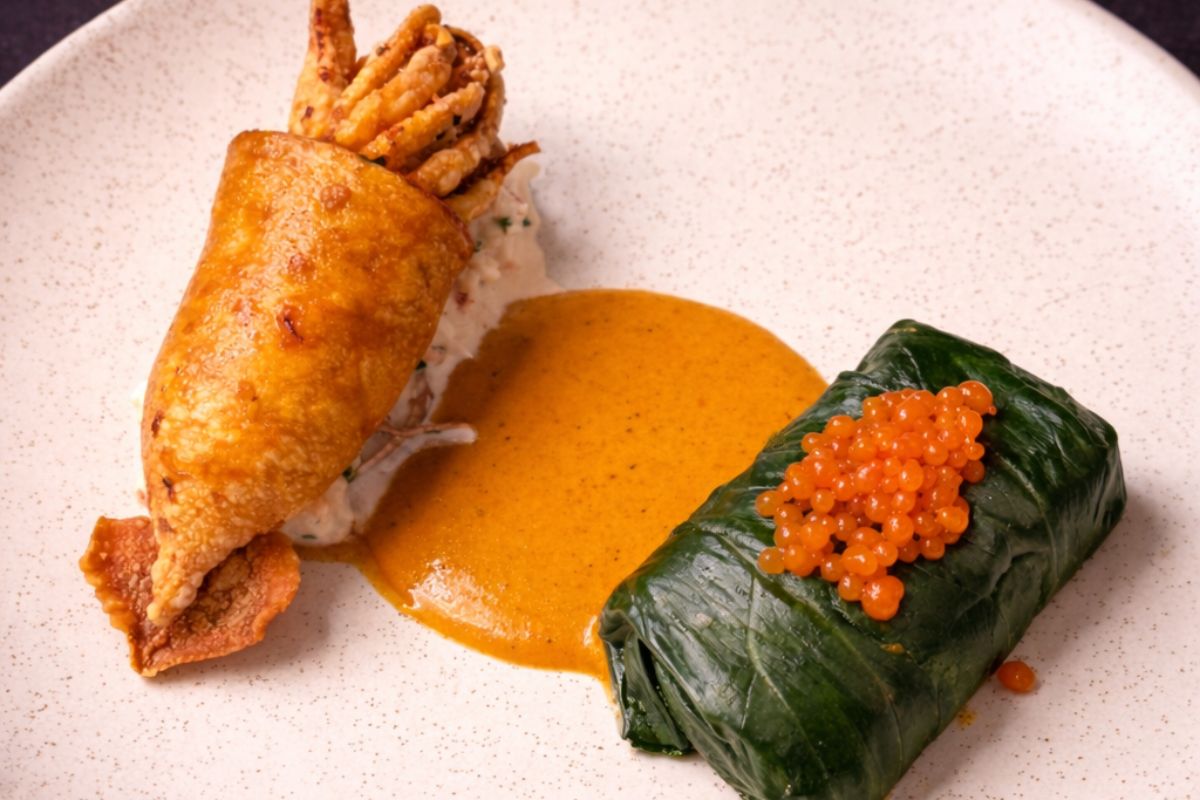
“The dish began with a memory rather than a recipe.”
The competition dish is not an attempt to reproduce that childhood food.
The hāpuka reflects New Zealand, where Sachdeva developed as a chef. Crab, squid and prawn take him back to the coastal flavours he discovered as a child, while coconut, spices and leaf-wrapped cooking bring another part of the dish back to India.
“For me, the dish isn’t about recreating the past. It’s about showing how the past continues to shape the way I cook today.”
Sachdeva arrived in New Zealand and began at Sidart in 2015 as a dishwasher. He progressed through the kitchen to Commis Chef, Chef de Partie and Sous Chef.
Sid Sahrawat was one of his earliest influences. Sachdeva said Sahrawat expected curiosity, discipline and attention to detail, but also gave him an example of how heritage and New Zealand influences could sit together in a chef’s food.
“They can both become part of your identity as a chef.”
Michael Meredith influenced him in a different way. From Meredith he learnt that food did not have to be complicated to work, and was introduced to Pacific flavours and cooking.
That experience later led into his time at Metita, where he was able to explore those flavours further.
Head Chef roles at Cassia and Metita brought the less visible side of running a kitchen into focus. There were teams to build, young chefs to develop, costs to manage and standards to maintain.
At Metita, the restaurant achieved two Cuisine Hats, Best New Restaurant and Oceania’s Best New Hotel Restaurant. Sachdeva said learning to build and lead the team was just as valuable.
He is now Executive Sous Chef at NZICC, where the scale is considerably different again. It has also made him think more about how ingredients are chosen, handled and used.
Seafood remains one of his strongest interests, but he is increasingly looking beyond the obvious choices. Bones, shells, heads and trim can all have another use, whether in stocks, sauces, oils or powders.
“I’m interested in techniques that allow an ingredient to remain recognisable while extracting as much flavour and value from it as possible.”
Steaming, poaching, fermentation, dehydration, infusion and reduction are among the techniques he uses, but Sachdeva does not want technique to overwhelm the ingredient.
His food still draws heavily on the flavours he grew up with. Spice, aromatics, acidity and fermentation are familiar territory. New Zealand has taught him something else.
“I think the most exciting place to cook is somewhere between your heritage and your environment.”
That idea will be tested in Sydney on 12 October, when Sachdeva presents his signature dish to the Pacific Regional Final jury, including Alanna Sapwell, Analiese Gregory, Daniel Hong, Clinton McIver, James Cole Bowen, Karen Martini and Ross Lusted.
Representing New Zealand is not something he takes lightly.
“I arrived in New Zealand and began my culinary career as a dishwasher. To now be representing the country on a Pacific stage is something I don’t take lightly.”
For young chefs trying to develop their own style, Sachdeva believes there is a danger in looking too hard at what everyone else is doing.
Social media gives chefs immediate access to restaurants, dishes and trends from around the world, but he believes their own experiences are a better starting point. The food they grew up eating matters. So do the kitchens they have worked in and the people they have learnt from.
“You don’t find your voice by trying to sound different. You find it by becoming more comfortable with what is genuinely yours.”
Sachdeva has more he wants to do. He wants to become an Executive Chef and work overseas, with Gaggan Anand one chef he would particularly like to work alongside.
One day, there may also be a restaurant of his own. He does not know yet whether that will be in New Zealand, India or somewhere else.
For now, there are bigger kitchens to learn from, a competition dish to perfect and another step to take.
Read more here.