Auckland coffee roasters Kōkako recently released their fourth biennial sustainability report. This is the third report they have completed to stringent Global Reporting Initiative (GRI) standards, with the help of local consultants, Go Well.
The GRI framework helps businesses and other organisations understand and communicate the impact of their operations on critical sustainability issues. It also means the performance of Kōkako can be compared to other organisations and sectors worldwide.
Kōkako Managing Director, Mike Murphy said that the sustainability reports enable the company to track its impact on people and the planet, hold itself accountable, and be completely transparent.
“These reports aren’t just about conveying the impact of our coffee production, most importantly, they’re about advocating for change within our industry and others.”
Covering the period from the first of July 2020 until the 30th of June 2022, this latest sustainability report spans a couple of the toughest years in the business’s history. The effects of the pandemic were vast and enduring, with the hospitality industry taking a particularly hard hit. With a significant loss in revenue, Kōkako walked the thin line between running a sustainable operation and business viability.
Many of the company’s sustainability commitments come at a higher cost to the business, namely offsetting their carbon emissions through the FairClimateFund, packing their coffee and drinking chocolate in home compostable packaging, and purchasing only certified organic, Fairtrade green beans (unroasted coffee) which can cost over 20 percent more than conventional coffee.
“The Kōkako reputation is built on these commitments, so deviating from them was never an option. We focus on sustainability because we believe business is inextricably linked to people and the environment. We’re not perfect by any means, there’s always more we can be doing, but we’re not interested in going backwards,” said Murphy.
Despite the challenges Kōkako faced as a business over the past couple of years, there were several notable achievements. For one, they could keep their entire team employed during the pandemic and even utilise some staff's extra downtime for professional development.
The pandemic also fast-tracked the company’s plans to develop its designated grocery brand, Everybird, which launched in April 2021.
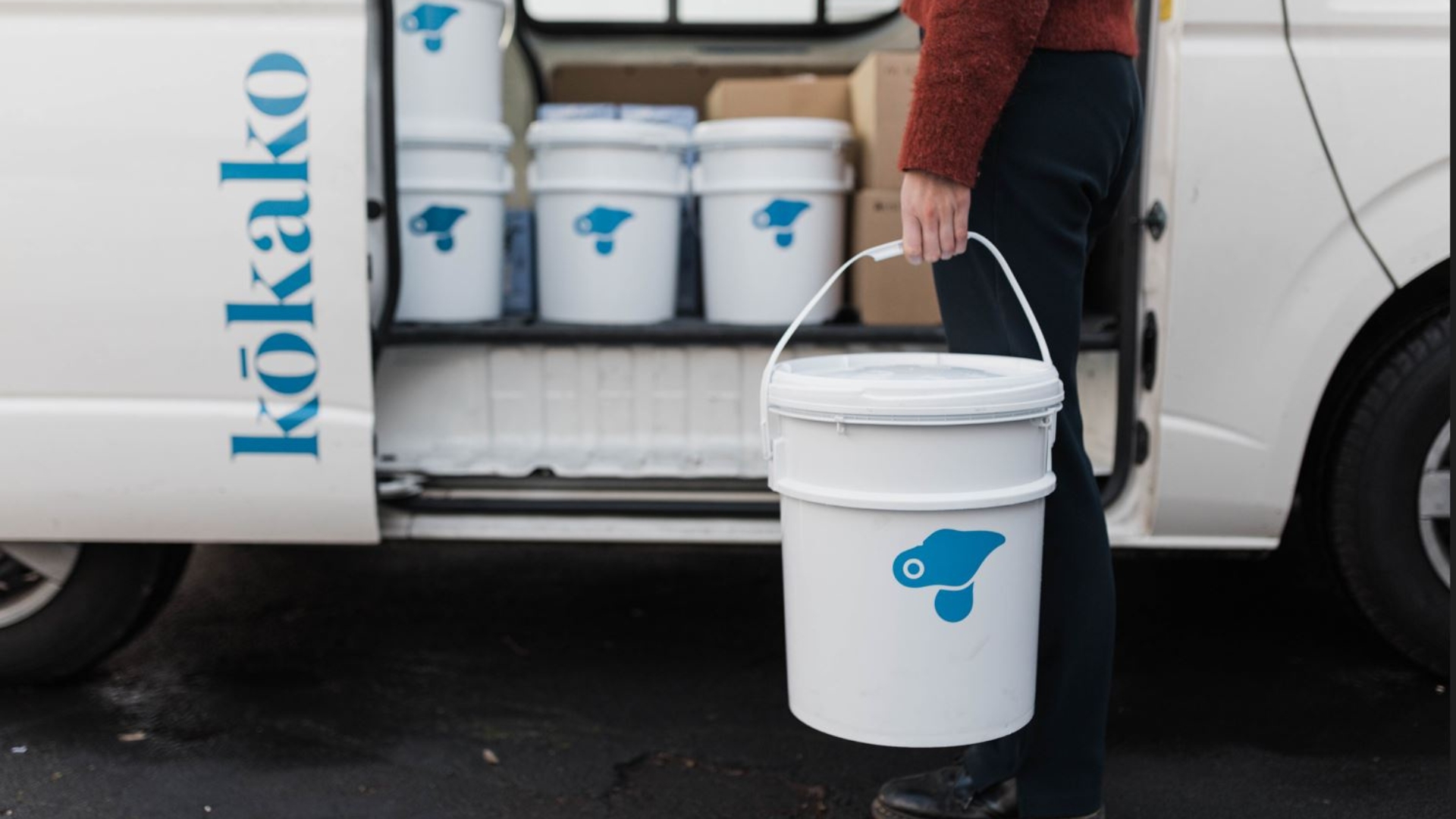
Other highlights from the report include their Fairtrade contributions, the increased uptake of their reusable bucket scheme and continued support of the Rotoehu Ecological Trust (who recently rebranded to Kōkako Ecosanctuary).
The report is also transparent about what hasn’t been achieved. Of the takeaway drinks sold at Kōkako Commercial Bay over the reporting period, just 13 percent were in reusable cups. This may be due to the move back to single-use takeaway cups during the pandemic, which may have undone some good habits. Regardless of the cause, the team at Kōkako is adamant this needs to improve.
In October 2022, Kōkako partnered with Again Again to offer an alternative solution for customers who forgot to bring a reusable cup. While the uptake has been slow, they’re optimistic that this could affect change once customers become more familiar with the system.
With the launch of Everybird and an additional car added to the Kōkako fleet, their carbon emissions have inevitably increased.
Kōkako is actively engaged in a coffee sector decarbonisation project facilitated by EECA and NZSCA.
“I really want to see a coffee roaster of scale that can be powered electrically or with bio-gas and still roast to the same profile and consistency as a natural gas-powered roaster.”