Sales in the food service industry are predicted to reach $997 billion in 2023, which has been driven partly because of higher menu prices as forecasted by the National Restaurant Association.
In its annual ‘2023 State of the Restaurant Industry’ report, the association outlined that sales are expected to increase by $60 billion over the next twelve months. Last year's prediction of $898 billion was exceeded and reached $937 billion in total.
The increase of 6.4 percent in forecast sales for 2022 outlined in the report included high rates of menu price inflation, according to the association’s senior vice president of research, Hudson Riehle.
“Restaurant operators obviously have to look for creative solutions in this environment,” Riehle said, “because the traditional restaurant model, from a cost standpoint, was not designed to endure the depth and breadth of this sustained period of much, much higher food and labour cost.”
Riehle said that the new normal in the industry demands innovations.
“If you go back and track it from 2019 through this year, the real sales are down by 8.6%, it is basically the new normal.”
The 2023 report also found that there is a projected growth of jobs in the industry, and could be as many as 500,000. The total employment of the industry could also reach 15.5 million by the end of 2023, which is a return to pre-pandemic statistics.
The report also highlighted the fact that inflation has continued to cast a shadow over the industry, with 92 percent of restaurant owners citing the cost of food being a major issue. Competition is another area of concern, as 47 percent of operators expect it to be more intense than last year.
Riehle said that revenue streams are predicted to expand, and that ‘alcohol to-go for table-servie’ concepts have proven popular among consumers.
“Particularly among the younger age cohorts, the ability to add alcohol to that off-premises order is a big deal,” Riehle said. “The report is quite clear that consumers are extremely comfortable with using technology in their daily restaurant encounters.”
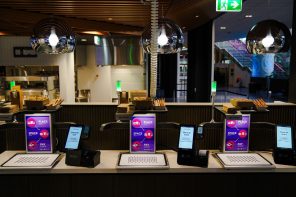
Riehle also added that younger consumers expect some technological savvy, whether it be through the use of smartphones, kiosks or video menu boards.
The report found that two-thirds of adults are more likely to order take-out food from a restaurant than before the pandemic. Almost 70 percent of adults prefer the option to dine outdoors as well.
Between 2023 and 2030, there is a forecasted prediction that more than 150,000 jobs a year will be added, with total staffing levels projected to reach 16.5 million by the end of the decade.
The report revealed that 58 percent of operators said that the use of technology and automation to alleviate labour shortages will be more common in 2023.
Hudson Riehl added that operators are still in an uncertain environment, as the pandemic is still having a large impact on the industry.
“I don't think anybody ever in any of their models anywhere could have predicted such a substantial impact,” he said. “For the restaurant industry, among all the industries, it was the one that was most severely impacted in terms of employment and sales declines.”