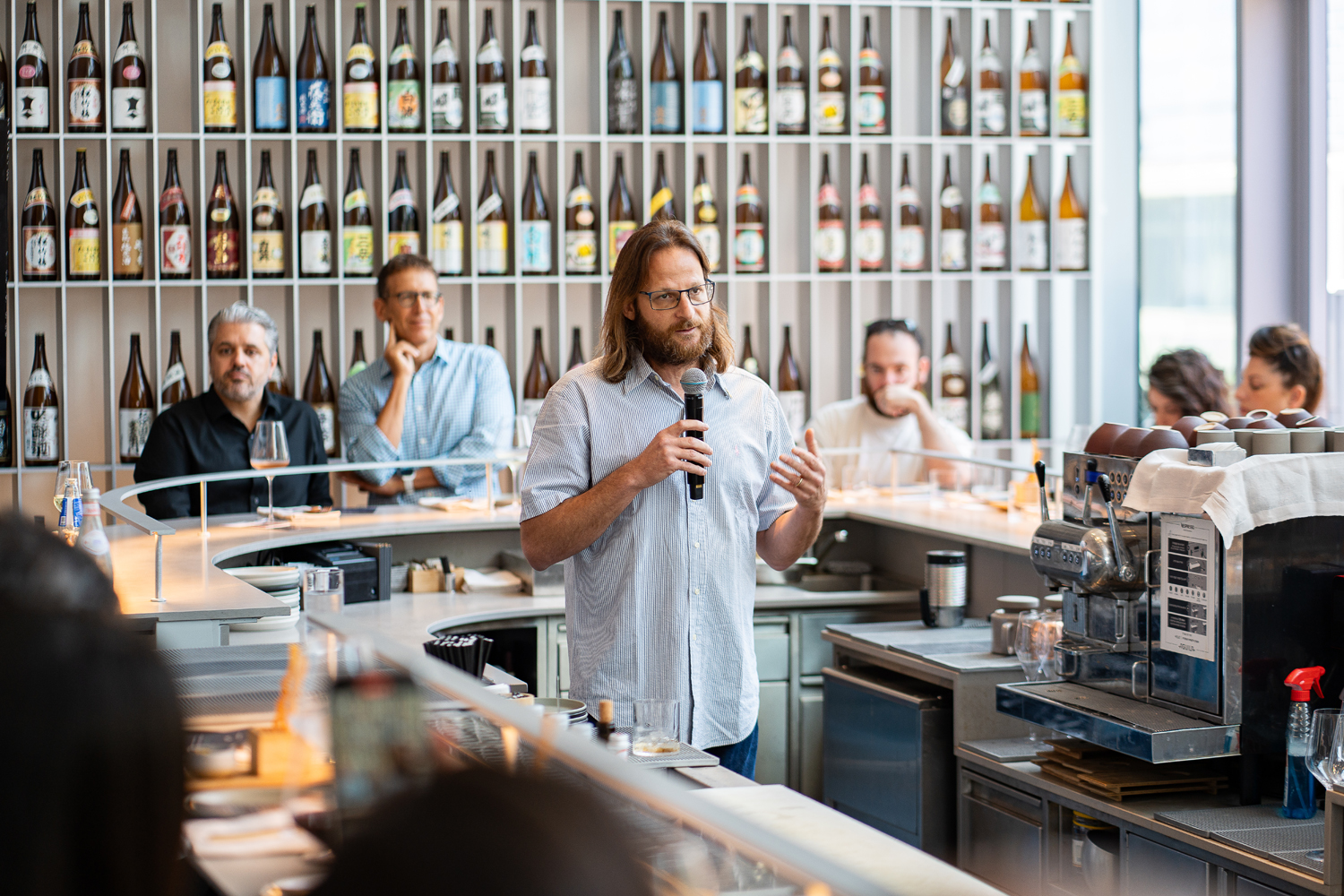
Cultivated seafood start-up Forsea Foods Ltd. has put its cell-cultivated freshwater eel unagi creation to the taste test at the chic Tel-Aviv restaurant “a” and welcomed an intimate gathering of 40 guests.
The exclusive group included investors, journalists, key opinion leaders in the food industry, representatives from the Japanese embassy, and various Japanese food companies based in Israel.
Three culinary fish creations were on the menu, including Forsea’s cell-cultivated iteration of unagi kabayaki—grilled fresh eel on a bed of aromatic rice. This traditional Japanese dish was featured as the centrepiece of the menu.
On a mission to save wild eel populations and other threatened species, the company pioneered a new approach to cell-cultivating fish tissues outside their native water habitats by applying organoid technology.
Forsea’s patent-protected method involved creating the ideal environment for fish cells to spontaneously assemble into three-dimensional tissue structures with their natural composition of fat, muscle and connective tissue. This method echoed the natural growth process of these tissues in a living fish.
The method bypassed the scaffolding stage and dramatically reduced the dependence on costly growth factors. This made the process highly scalable and raised its commercial viability and price parity with traditionally aqua-farmed eel meat.
Wild eels have experienced severe supply shortages due to overfishing, while aquafarming of eels has remained challenging, and breeding eels in captivity has remained elusive. This shortfall occurred amidst a surge in demand for the Japanese delicacy, not only among the Japanese population but also across Asia, the United States and Europe.
“Forsea’s unique organoid technology has the potential to overcome many of the industry bottlenecks in bringing cultivated meat to the consumer plate,” said Roee Nir, CEO and co-founder of Forsea.
“Since the start of the year, we have significantly improved our cell lines and worked diligently to enhance our recipes. This event was a great opportunity to present our unprecedented achievements to partners and industry stakeholders.”
At the closed dining event, guests enjoyed the first tastings of Forsea’s cultured eel unagi filets.
Celebrated Israeli gourmet chef Yuval Ben Neriah, a specialist in Asian cuisine and owner of the five-elements-inspired restaurant Taizo in Tel Aviv, played a pivotal role in fine-tuning the finished product to capture the authentic flavour and sensory attributes of the Japanese specialty.
“As a chef who spent many years tantalising diners with fine Asian cuisine, this project with Forsea has been particularly exciting as it marks my first venture into future food, the world of cell-cultured seafood, and its resonating sustainability message,” said Ben Neriah, the restaurant's chef.
“The feedback from the diners was indeed uplifting. Several remarked that they wouldn’t have guessed that the unagi was cell-cultivated had they not been informed.”
Executive chef Katsumi Kusumoto, who started the vegan restaurant SAIDO in Tokyo, also contributed to bringing Forsea’s inaugural unagi product to culinary perfection. Unagi has been Chef Kusumoto's famous specialty for many years.
Takahashi Seiichiro, Japan’s Deputy Chief of Mission to Israel, congratulated Forsea on its achievements and thanked it for choosing the eel, an endangered species but indispensable for the Japanese and Asian diet.
“While we Japanese have been eating eel for over 5000 years, we understand that cultivating eel is no simple task. Therefore, I believe introducing the first cell-cultured eel results from great comprehensive corporate efforts.”