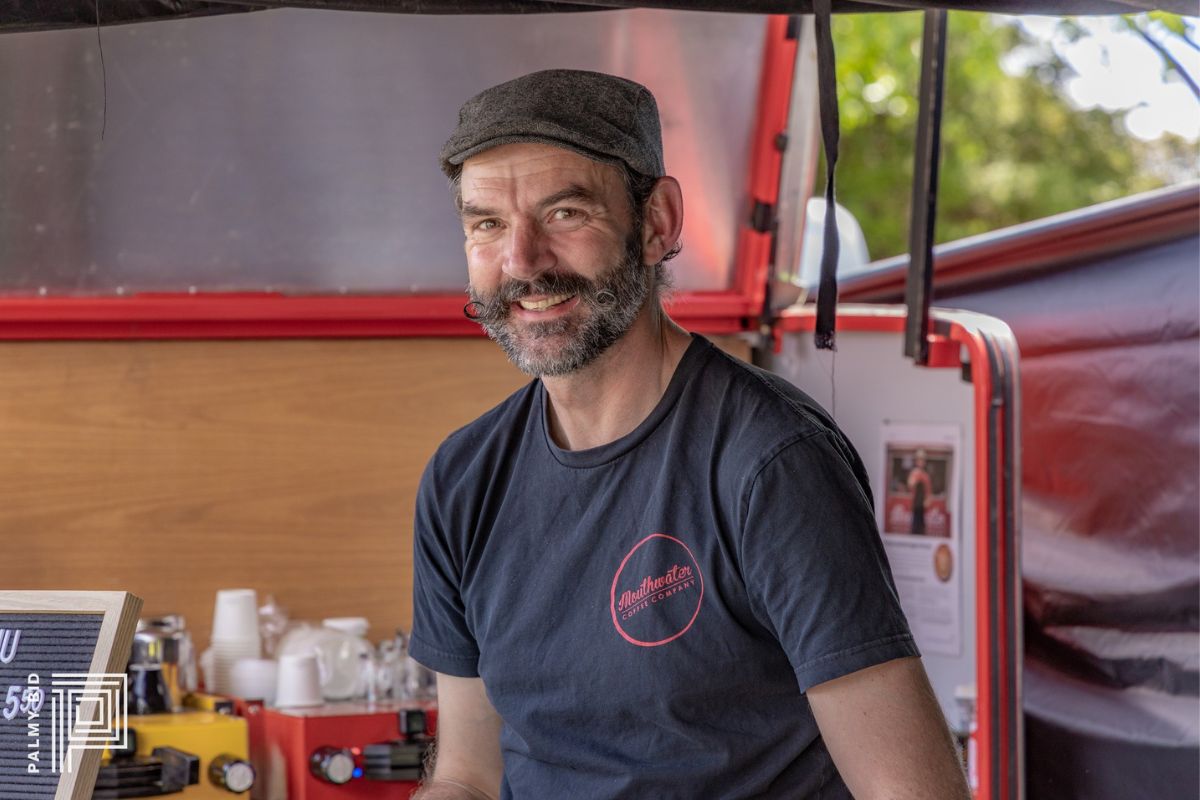
Barista Andrew Feldon has witnessed the strong growth of coffee culture through innovation, trends and customer preferences.
Being a barista isn’t necessarily as straightforward as it sounds. Keeping up to date with market trends, customer demands, and spending behaviour has never been as important as it is in the current market. Andrew Feldon from Mouthwater Coffee Company said many customers have tried to reduce how much dairy they consume, whether it be for dietary reasons or intolerance, or even finding the joy in small and strong coffees with less of a milk component.
Feldon, himself a champion barista, said there has definitely been a big uptake in recent years to more alternative milks, especially now that there are far more options than when he first started 20 years ago. The price of dairy is also feeding some debate too in his opinion, as this has gone up considerably over the last few years as well.
“From where I sit, the future for plant-based looks bright. For our business (we have three sites serving takeaway coffee), the growth in alternative plant-based options has grown. While the popularity in different milks has fluctuated from soy, almond and coconut, our most popular is oat milk by far,” said Feldon.
As the popularity of options has increased, it has become far more than a trend. Feldon believed that plant-based milks are here to stay, as there are some great brands bringing out great products in this space. While this does make a barista’s job a little busier, having to juggle different jugs and milks, it would turn good baristas into time management rock stars in Feldon’s opinion.
While trends are always evolving, Feldon was excited to see what innovation was on the horizon. Some of the biggest changes that he has seen revolved around sustainable practices, whether that be in traceability in packaging or coffee growing practices. Some specialty coffee shops are constantly embracing ways to showcase different varieties of beans, often with what he described as “crazy” flavour profiles.
He said it’s always a tricky balance trying to do impressive things while the cost of doing so is often prohibitive.
“We find in the smaller regions people love seeing “cool new things” and will happily give it a try, but always go back to their staple - whether that be a large flat white, or long black. We are creatures of habit, right?”
Part of adapting to change has been to make coffee a beverage for all seasons. A prime example of this has been the rise of cold brew.
Feldon said that it was great to have options for the summer months, where without them, there is a potential to lose customers.
One of the benefits that Feldon sees with cold brew coffee is that, if made well, it can be a well-balanced drink that often highlights different flavours and characteristics of the various coffees used, and exposes customers to a different coffee experience.
Canned or bottled RTD-style beverages have offered the perfect way for businesses to offer customers cold brew options, as the logistics around crafting a good cold brew can be problematic for some.
Feldon is a big advocate for the craft of the barista. He said it is possible to offer an amazing selection of coffees without having to reinvent the wheel.
As the barista championship season has rolled around for another year, Feldon is eager to see what trends and innovations will be on show this year.
“Baristas being curious about what they know, and how they serve it, can make a huge difference to what they serve, without it even needing to be complicated. Simple done well stands out more to me than some expensive and overcomplicated offering.”
One of the biggest challenges in determining customer ordering behaviours has been the price at the counter. Feldon said that although sometimes it does, he has seen coffee suppliers become more transparent with increases.
“Yes, this may have meant a few people may not be buying coffee as much. I also feel this is an indication of the economy as well. I do believe it will improve.”
Feldon added that so many factors are feeding into it in the current market at a time when consumers are feeling the pinch, which has made it challenging. He felt that customers value businesses when they are being honest and transparent about how the market is and how it is affecting everyone.
“They want to support their local, and understand when it’s delivered well. Do I believe it’s become expensive? Yes and no. It's jumped up quickly, sure. Supply and demand, while also supporting the countries providing us with amazing coffees to work with. I think it has, for a long time, been seen as a cheap commodity.”
He said time will tell if it helps shift the mentality of the mainstream consumer.
While market growth may feel on pause at present, Feldon believed that as the economy and all the financial talk around that settles down, the coffee market will make a stunning comeback.
More news here.